|
|
||||||||||||||||||||||
|
5 | Musical ElementsWinds from Prehistory to ModernPeter Kun Frary
.
|
 Air Columns

 Conch Horn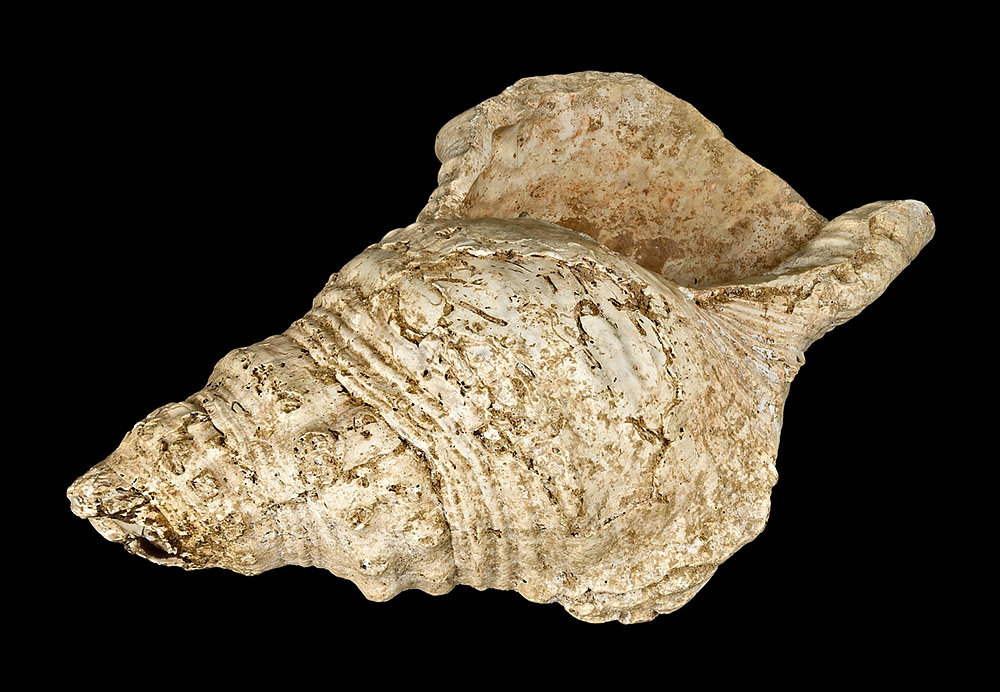
 Didgeridoo
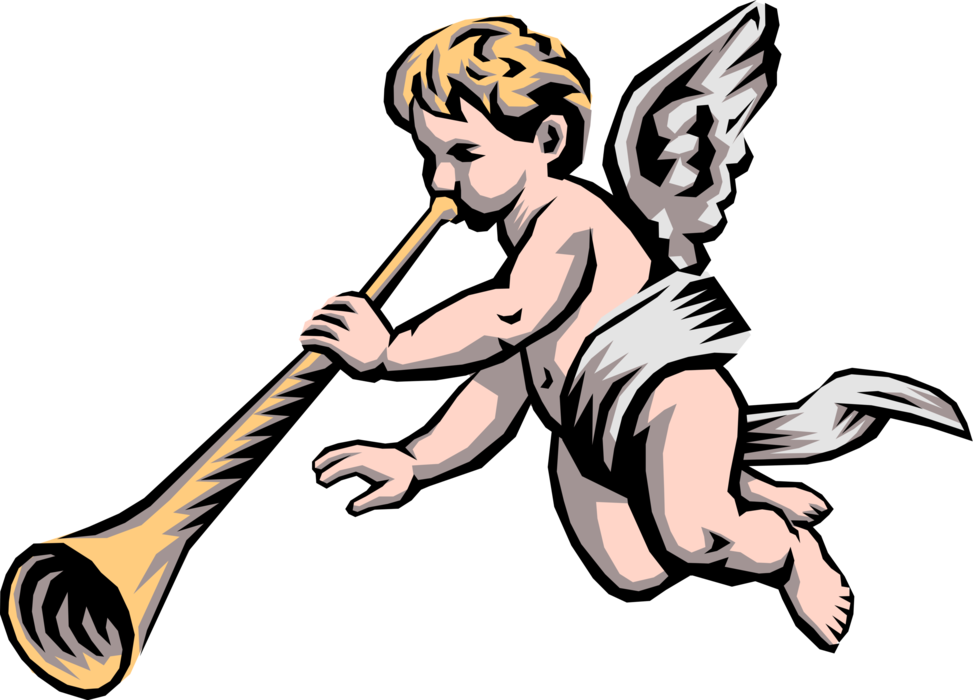 Signaling Origins
|
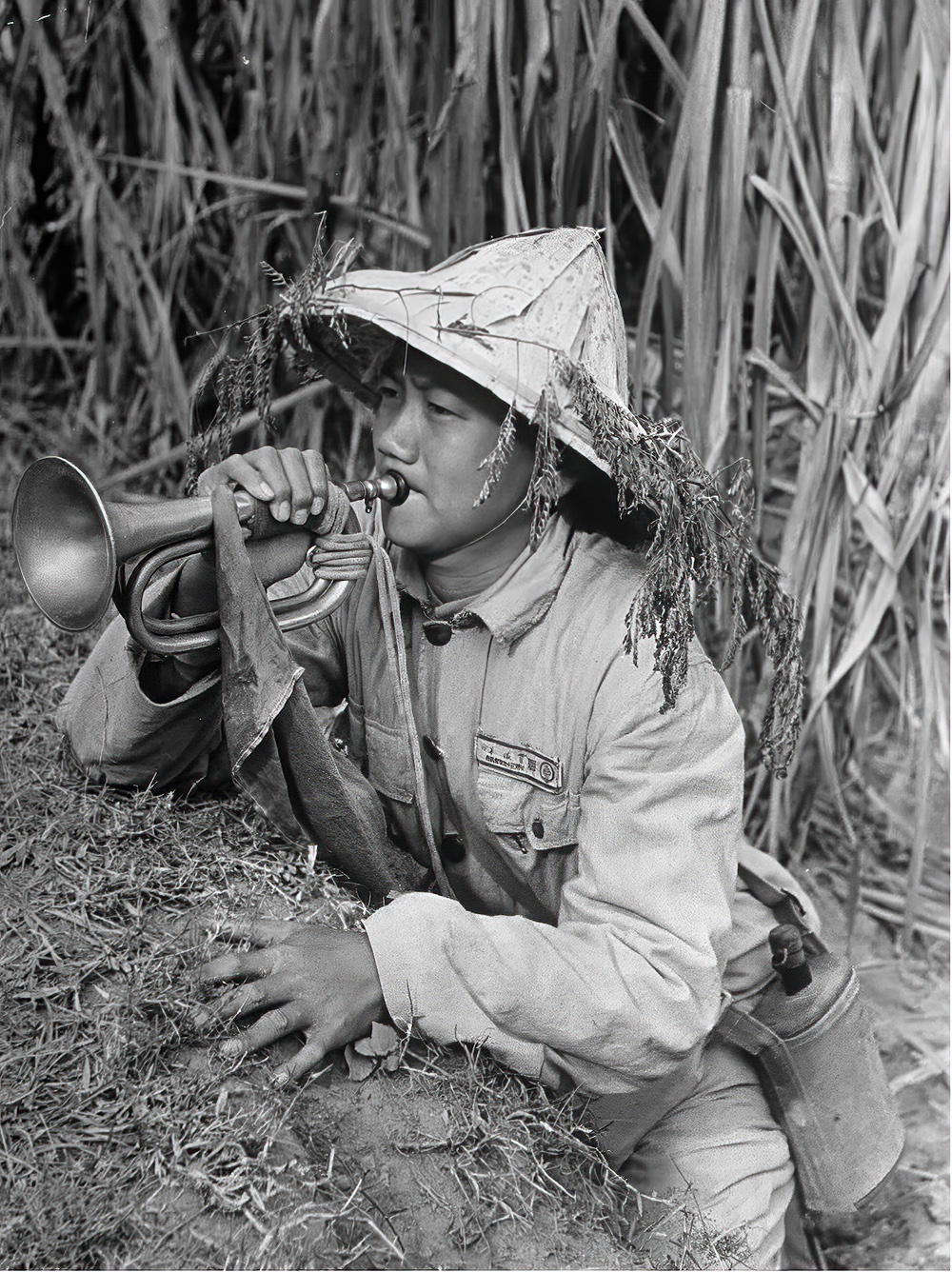 |
 Bugle
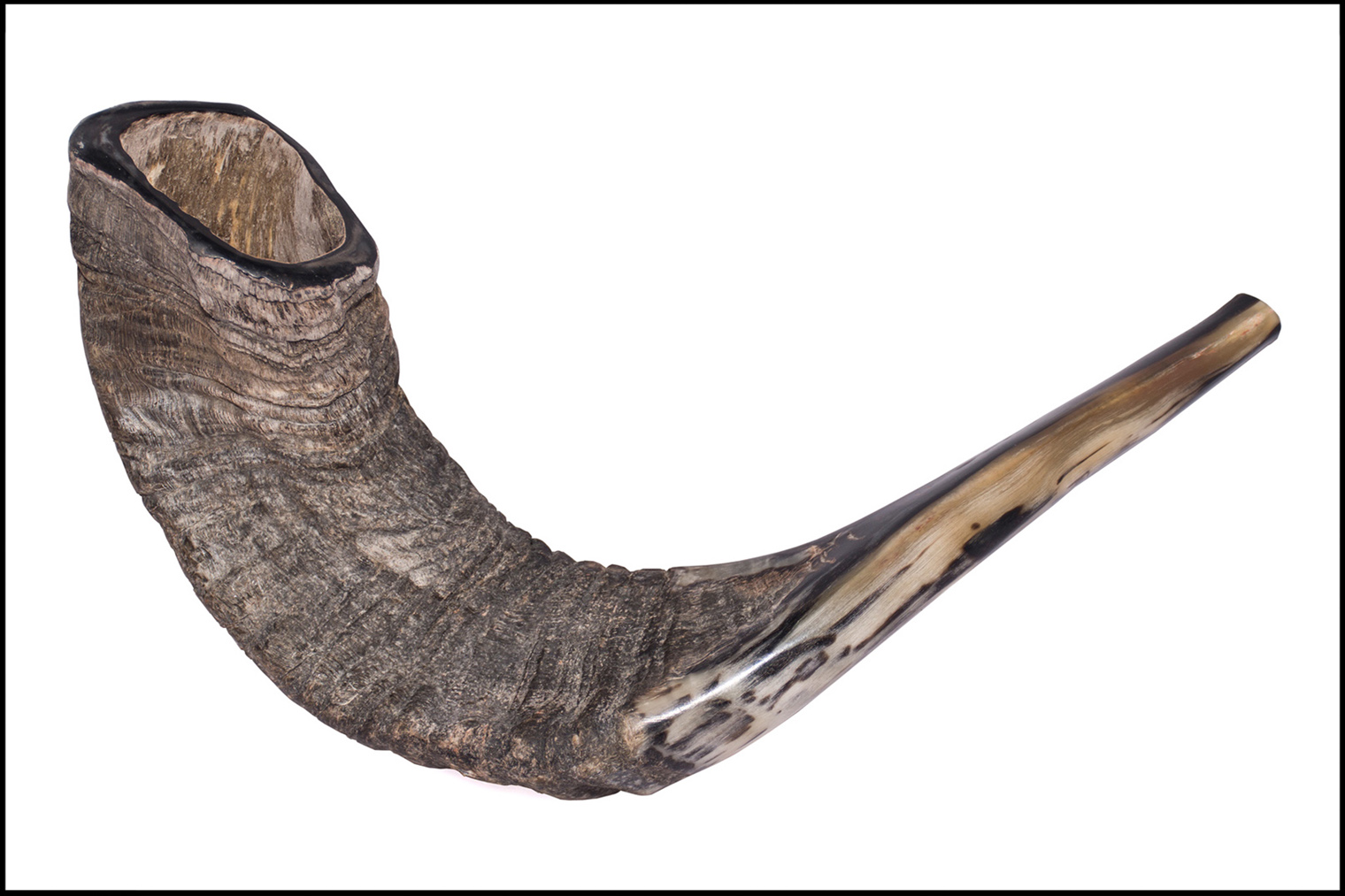
BugleShofar | The shofar is a brass instrument made from a ram's horn, likely first used by Neolithic herders, and now best known for its use in Jewish religious ceremonies. | Wikimedia Commons
Let's Get Biblical
The function of the trumpet (translation of ram's horn or shofar) in the Bible was to blast out a warning of impending doom or the arrival of the Lord:
"Blow a trumpet in Zion; sound an alarm on my holy mountain! Let all the inhabitants of the land tremble, for the day of the Lord is coming; it is near." Joel 2:1
Ancient brass instruments such as the conch horn, Swiss alphorn, kelp horn (seaweed), Jewish shofar (ram's horn) and military bugle are still used today in ceremonies and stage productions.
Jewish prayer | Shofar played by the Yamma Ensemble (5:24)
 Modern Brass Instruments
Contemporary brass instruments are typically made of brass or other metals, hence the name brass. Current brass designs use slides or valves to change the length of the air column. The player's embouchure, lip tension and air flow are used to select the specific harmonic or pitch produced from the air column. In contrast, most ancient brass instruments—e.g., conch horn and bugle—lack valves, holes or keys and rely only on the player's lips and airflow to change pitch.
B-Flat Trumpet | Under the player's right-hand fingers are the valves used, along with the player's lips, to control pitch | ©Peter Kun Frary
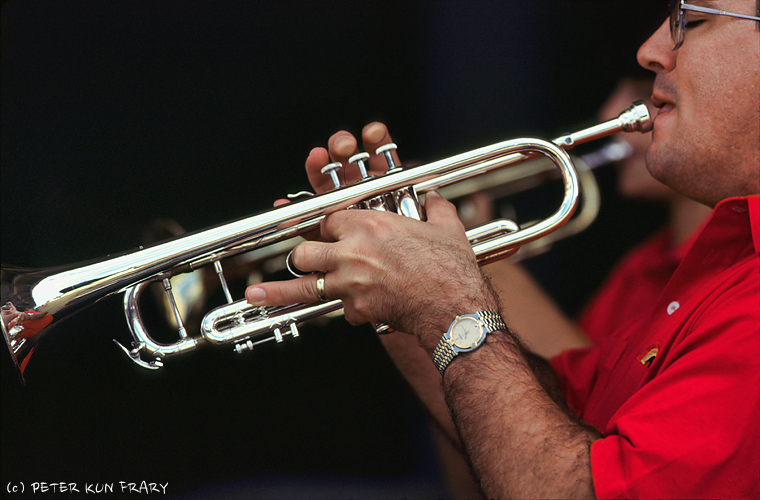
Trumpet, trombone and tuba are common examples of modern brass instruments and members of the larger category of aerophones. To make brass instruments ergonomic, the tube is often coiled. Listen to the sound of a brass ensemble:
Epic Low Brass Game of Thrones Theme | Eleven bass trombones, six contrabass trombones, six tenor trombones, six tubas and three cimbassos (2:39)
Valves
Brass instruments—e.g., trumpet, tuba and cimbasso—use valves to change air column size. Trumpet virtuoso Alistair Mackie discusses trumpet technique:
Alistair Mackie introduces the trumpet (13:11)
Slides
Instead of valves, trombones employ a telescoping slide mechanism to change the length of the vibrating air column. The most commonly played trombones are the tenor trombone and its larger and lower pitched sibling, the bass trombone.
Trombone | Mid-nineteenth century Europe | Metropolitan Museum of Art
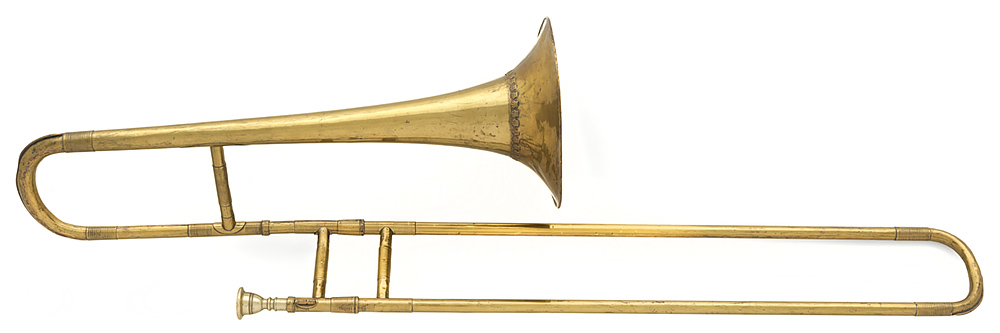
The name, trombone, comes from the Italian word, tromba, meaning trumpet, and one, a suffix indicating a large size. Thus, trombone means big trumpet.
 Woodwind Instruments
Woodwinds were traditionally constructed of wood, hence the name, although many modern woodwinds are metal. Most woodwinds have a pipe-like body (not coiled) and change pitch by varying air column length with a system of holes or keys. The woodwind family is subdivided into three categories: flute, single reed and double reed instruments. |
|
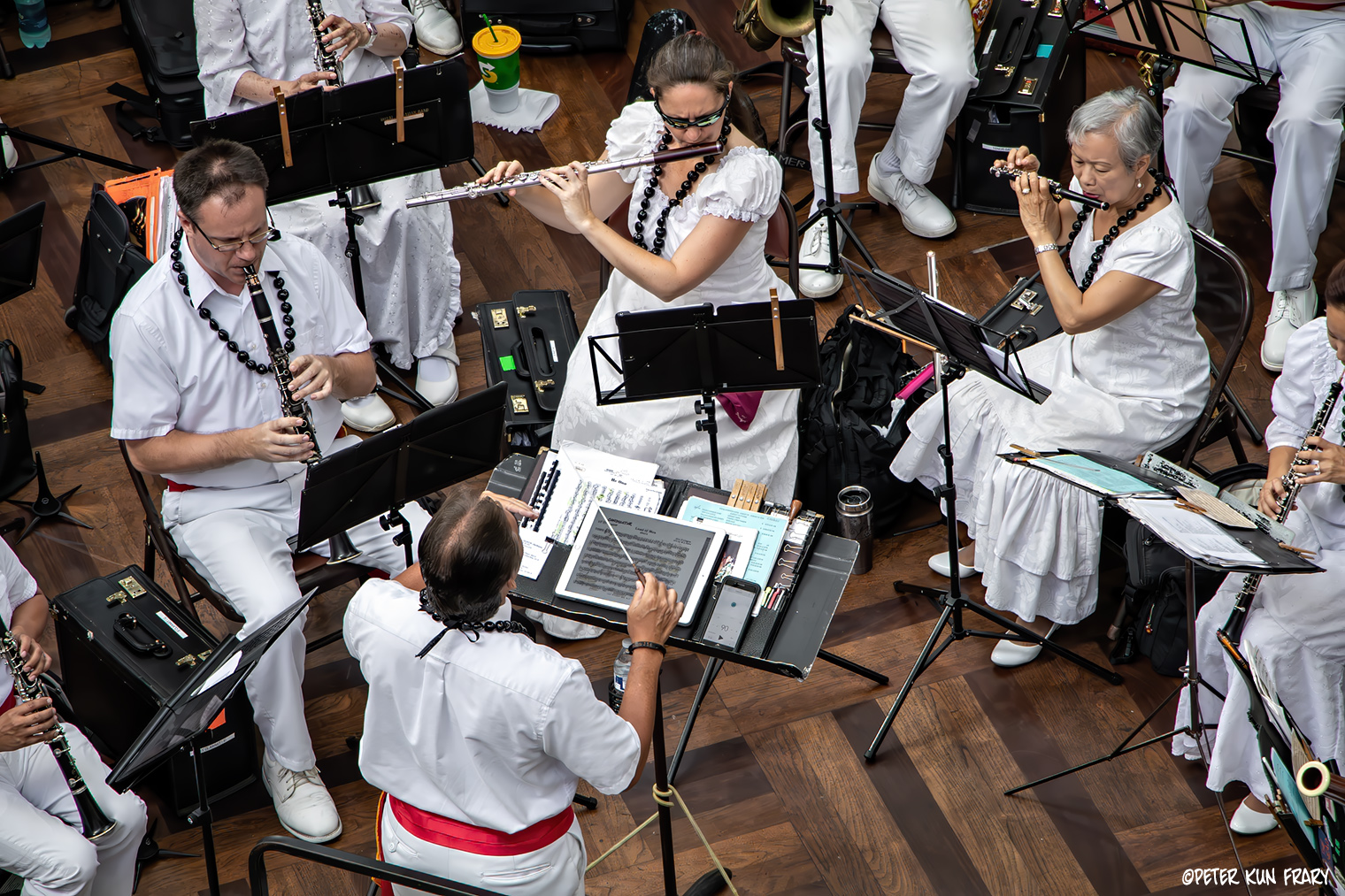
Royal Hawaiian Band Woodwinds | Front from left to right: three clarinets, flute, piccolo and oboe | ©Peter Kun Frary
Flutes
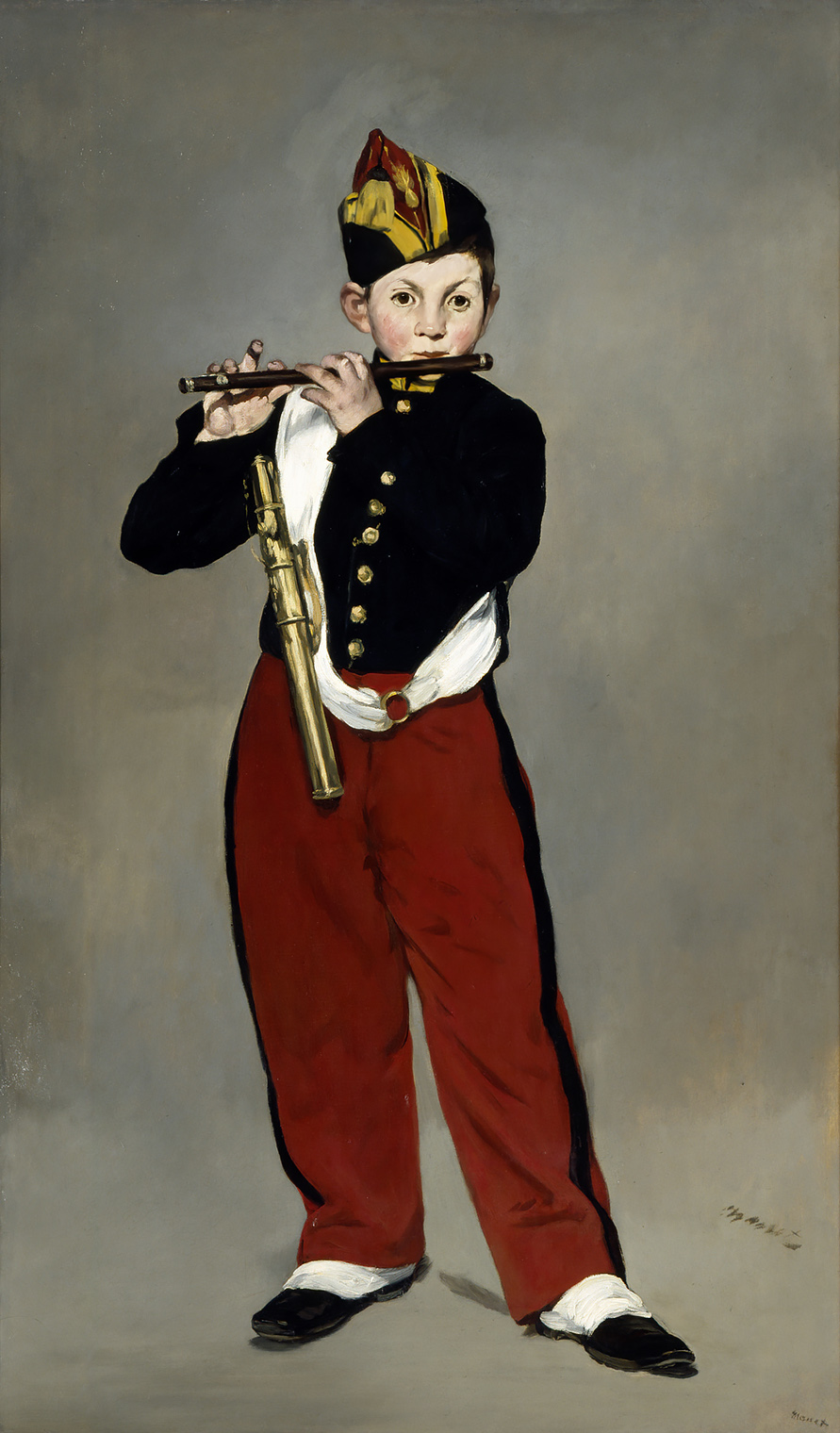
The flute and its higher pitched sibling, piccolo, are found in marching bands and orchestras. Flutes are made in the shape of a pipe or cylinder but other shapes are possible. Sound is created when a player blows across a hole on a tube. In the case of the recorder, the player blows into a narrow channel. A beer bottle becomes a primitive flute when you blow across the top opening. Breath creates eddies of air that vibrate the air column within the bottle, producing musical tones.
FLUTES - What Makes Them Different? (5:22)
Paleolithic Flutes
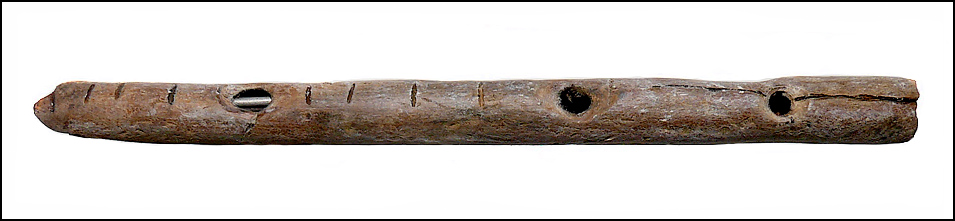
Flutes have the distinction of being the oldest known musical instruments. The oldest musical artifact, the Divje Babe Flute, dates from 50,000 and 60,000 years ago (Upper Paleolithic) and is believed to have been made by Neanderthal man.
Neanderthal Flute | Middle Paleolithic animal flute found in the Divje Babe cave in Slovenia. | BBC Reels
Additional intact flutes date from the Upper Paleolithic, found in caves in the Swabian Alb region of Germany. Constructed of animal bone and ivory, these Aurignacian flutes were made by Homo sapiens between 43,000 and 35,000 years ago, and excavated along with the oldest known Ice Age art.
Aurignacian Flute | Upper Paleolithic flute found in a Geissenklösterle cave and made from animal bone. | José-Manuel Benito | Wikimedia Commons
Flute, piccolo, recorder and panpipes are the most common members of the flute family and are frequently played in ensembles and classrooms.
Transverse Flute
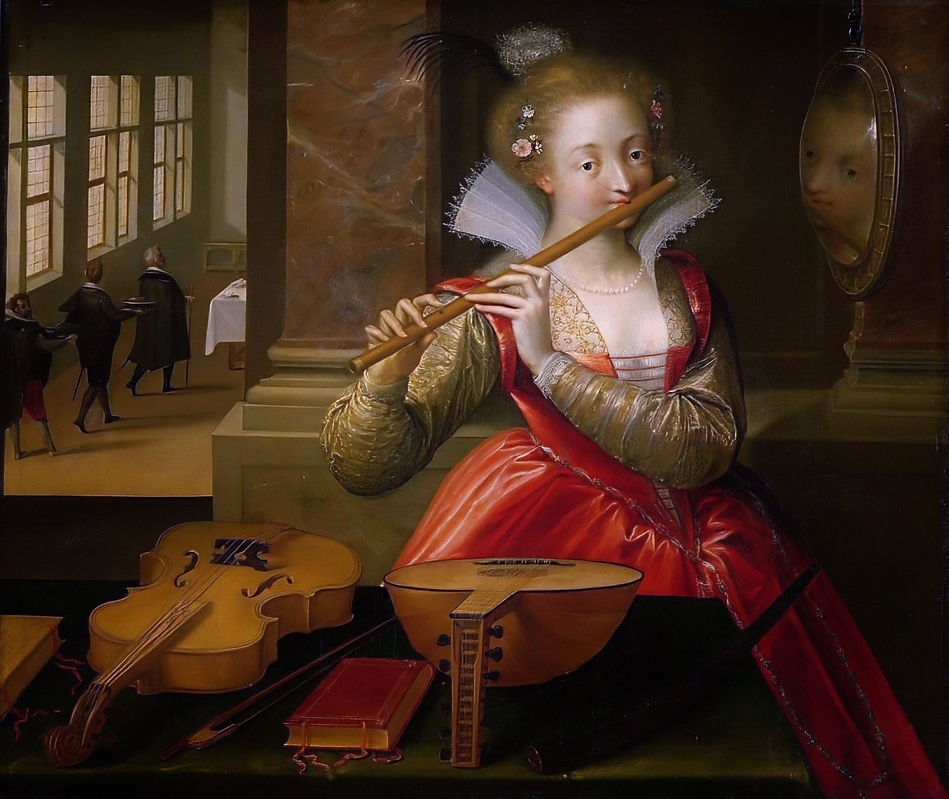
The type of flute played in modern orchestras and marching bands is called a transverse flute. Blow across a hole on the side to vibrate the air column, and change pitch by working a set of keys or holes along the tube. Originally transverse flutes were constructed of wood. Most modern examples are made of metal, typically copper-nickel, silver and sometimes gold. |
|
Baroque Transverse Flute | Garion c. 1720-40 | Metropolitan Museum of Art
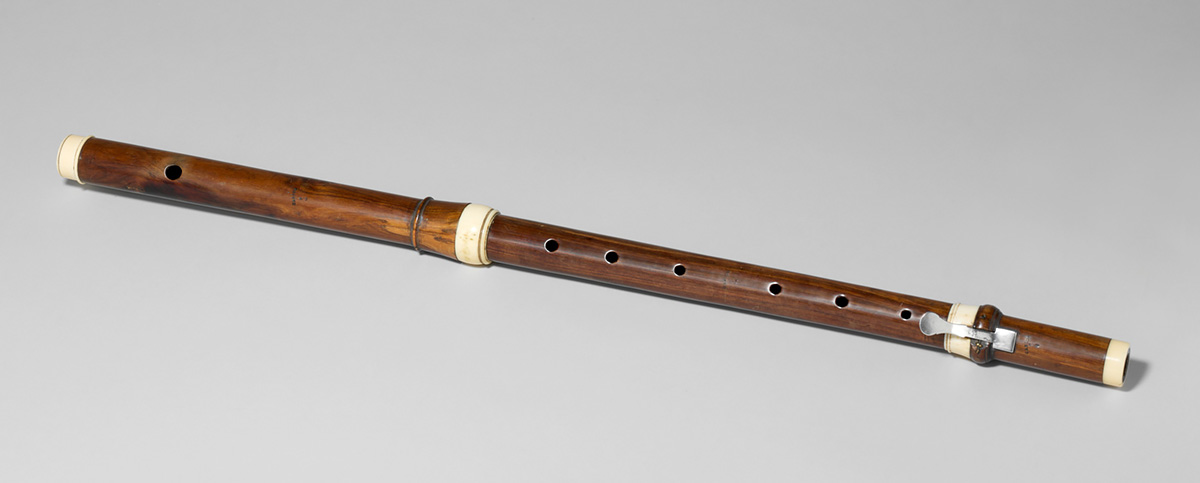
Listen to Kate Clark play a wood Baroque transverse flute. Unlike modern flutes, there is no mechanical keys to change the length of the vibrating air column. Ms. Clark blocks and opens holes with her fingers to change pitch.
Partita in A Minor, Allemande BWV 1013 | J.S. Bach (5:17)
Andean Panpiper in Silver (c. 1300-1400) | Metropolitan Museum of Art
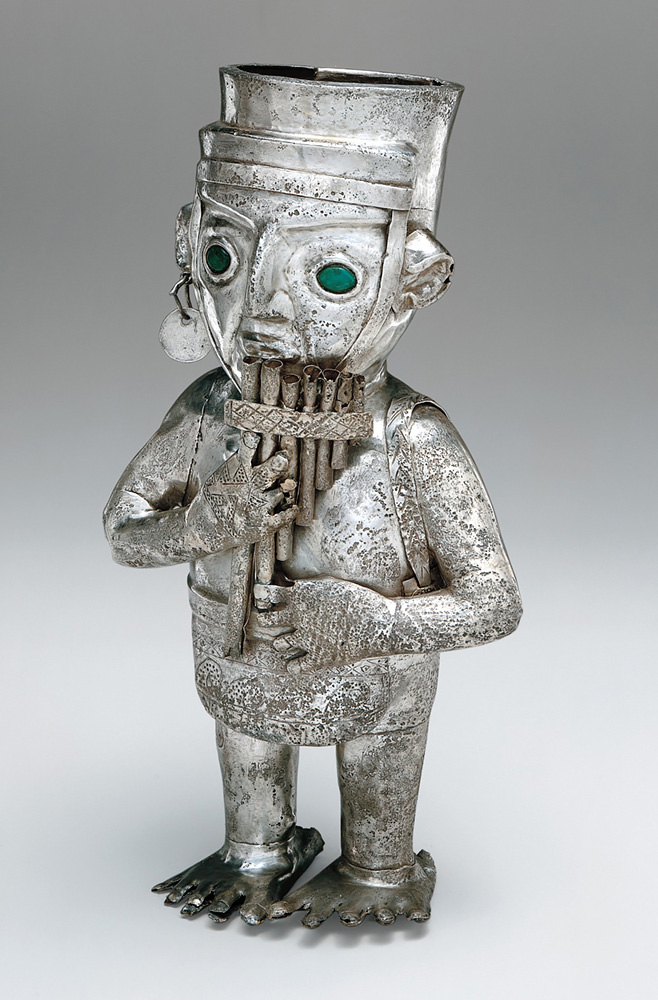
 |
Panpipe |
The panpipe, also called a pan flute, is an ancient member of the flute family found throughout the ancient world, including pre-Columbian America, Oceania, Europe, Asia, and Africa. The earliest known depictions of panpipes, circa 6000 BCE, are found in drawings from Anatolia (Asia Minor). The oldest surviving instruments, dated to 4300 BCE, were excavated in Peru. Such a widespread distribution since Neolithic times suggests a combination of independent invention and cross-cultural exchange.
Named after Pan, the Greek god of nature and shepherds, the panpipe is a simple design: a bundle of different-length tubes, usually cane or bamboo. There are no holes to change the length of the air column. Instead, each note has its own tube. In other words, the player blows across the top of different pipes to produce different notes, requiring rapid movements for even simple melodies.
Panpipe | Late nineteenth century Solomon Islands panpipe made from bamboo bound with reeds and twine. | Muséum de Toulouse
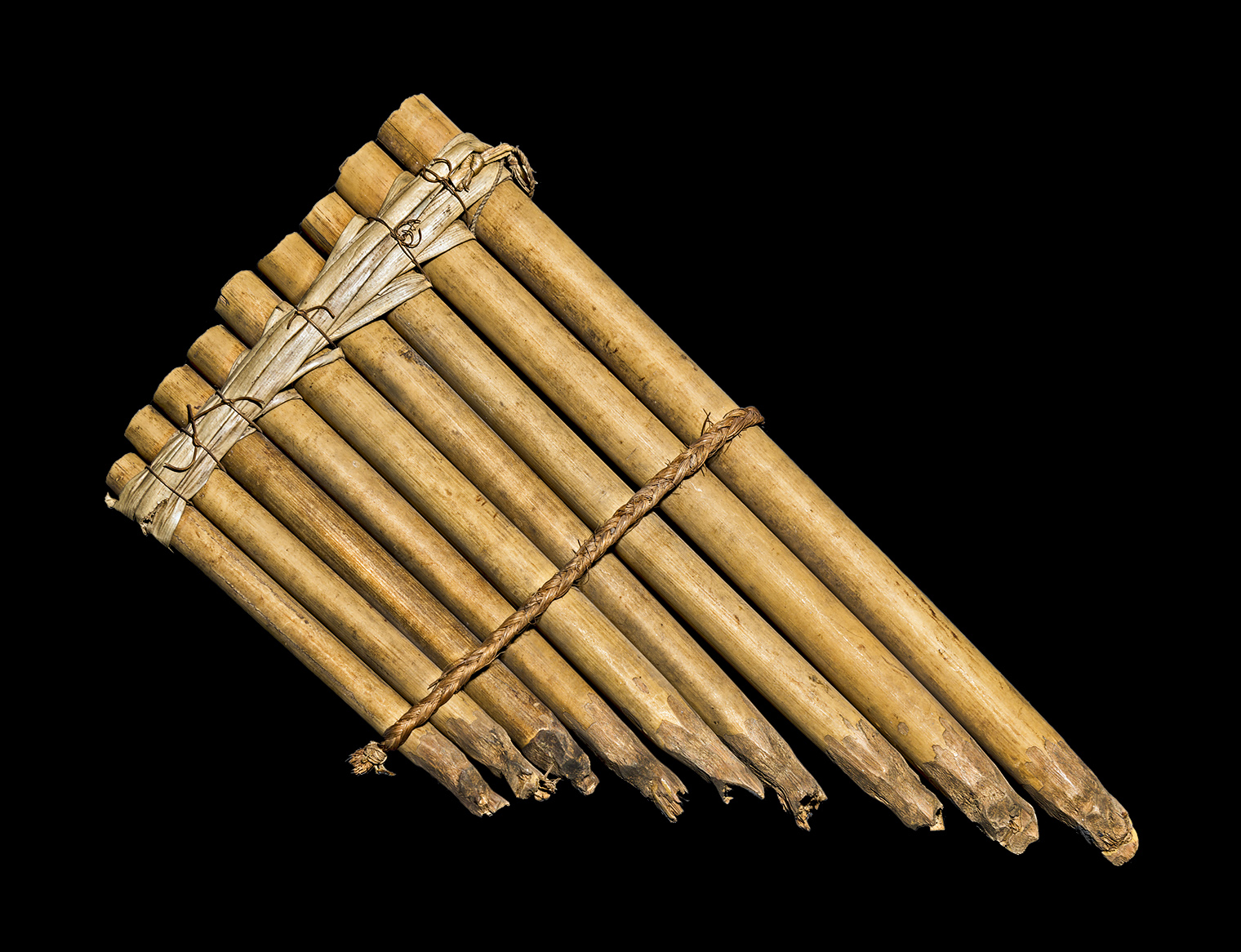
Listen to the Inamauri Panpipers of the Solomon Islands perform a popular song using panpipes and bambo tube percussion:
Avicii - “Wake Me Up” | A World Beat/Pop fusion cover of “Wake Me” Up by the Inamauri Panpipers (4:38)
Cross-Cultural Exchange
The blending of Solomon Islands music culture with Western popular song, “Wake Me Up,” is both a unique music style and an example of cross-cultural exchange, i.e., interactions between different cultures involving the exchange of ideas, beliefs, practices, and goods.
Single-Reed Woodwinds
Single-reed woodwinds have a long legacy, with the earliest known instrument, the Egyptian memet, dating back to c. 2700 BCE. These primitive single-reed instruments, also known as idioglots, were simple in construction, often featuring the reed and fingerholes cut directly into a plant stem.
How Reeds WorkSound is generated by a vibrating reed in single-reed woodwinds like saxophones and clarinets. A reed, a thin bamboo or cane slice, is placed in a mouthpiece and attached to the instrument’s end. An air stream from the player’s mouth vibrates the reed. Pitch is controlled by opening and blocking holes with fingers or mechanical keys. |
|
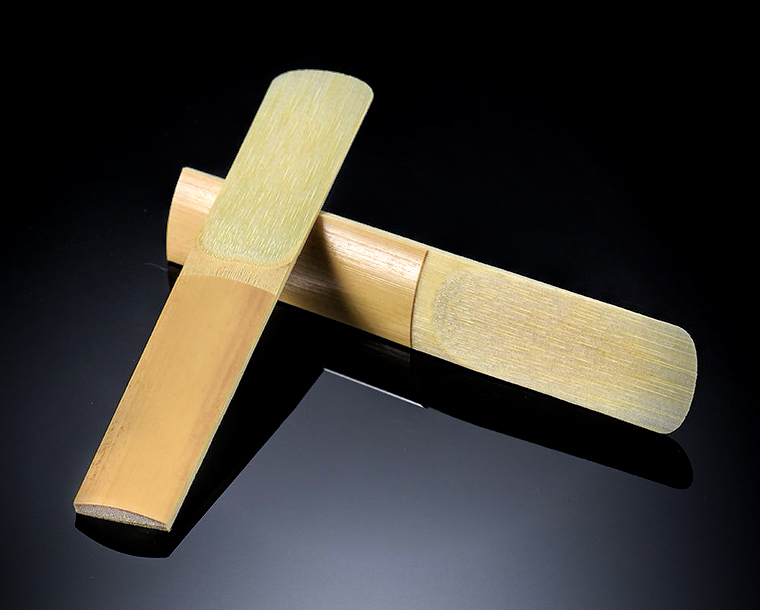
Saxophone | A single reed woodwind instrument popular in jazz, rhythm and blues and marching band music | ©Peter Kun Frary

Saxophone
The saxophone was invented by Belgian instrument maker Adolphe Sax during the 1840s. Although a relative newcomer to the woodwind family, saxophones have enjoyed great notoriety and are extensively used in school bands, pop music, and jazz. Simon Haram discusses the sound and technique of the saxophone:
All About the Saxophone (28:22)
Double-Reed Woodwinds
Double-reed woodwind instruments have a long history, with evidence of their existence dating back to c. 3000 BCE in Mesopotamia and Egypt. European instruments similar to the modern oboe, such as the shawm, can be traced to the Middle Ages and were commonly used in Catholic Church services to double human voices. The oboe was developed from the shawm in 17th-century France and first known to have been played in the court orchestra of Louis XIV.
How Double-Reeds Work
The oboe, English horn, and bassoon use two reeds held between the player’s lips, hence their name, double-reed woodwinds. A stream of air from the player’s mouth sets the reeds in motion. Double-reed woodwinds are known for their temperamental nature, and players spend a significant portion of their lives shaping, soaking, and sucking reeds to achieve the optimal sound. Watch Amy Harman demonstrate the bassoon, the bass instrument of the double-reed family.
Amy Harman introduces the bassoon (10:16)

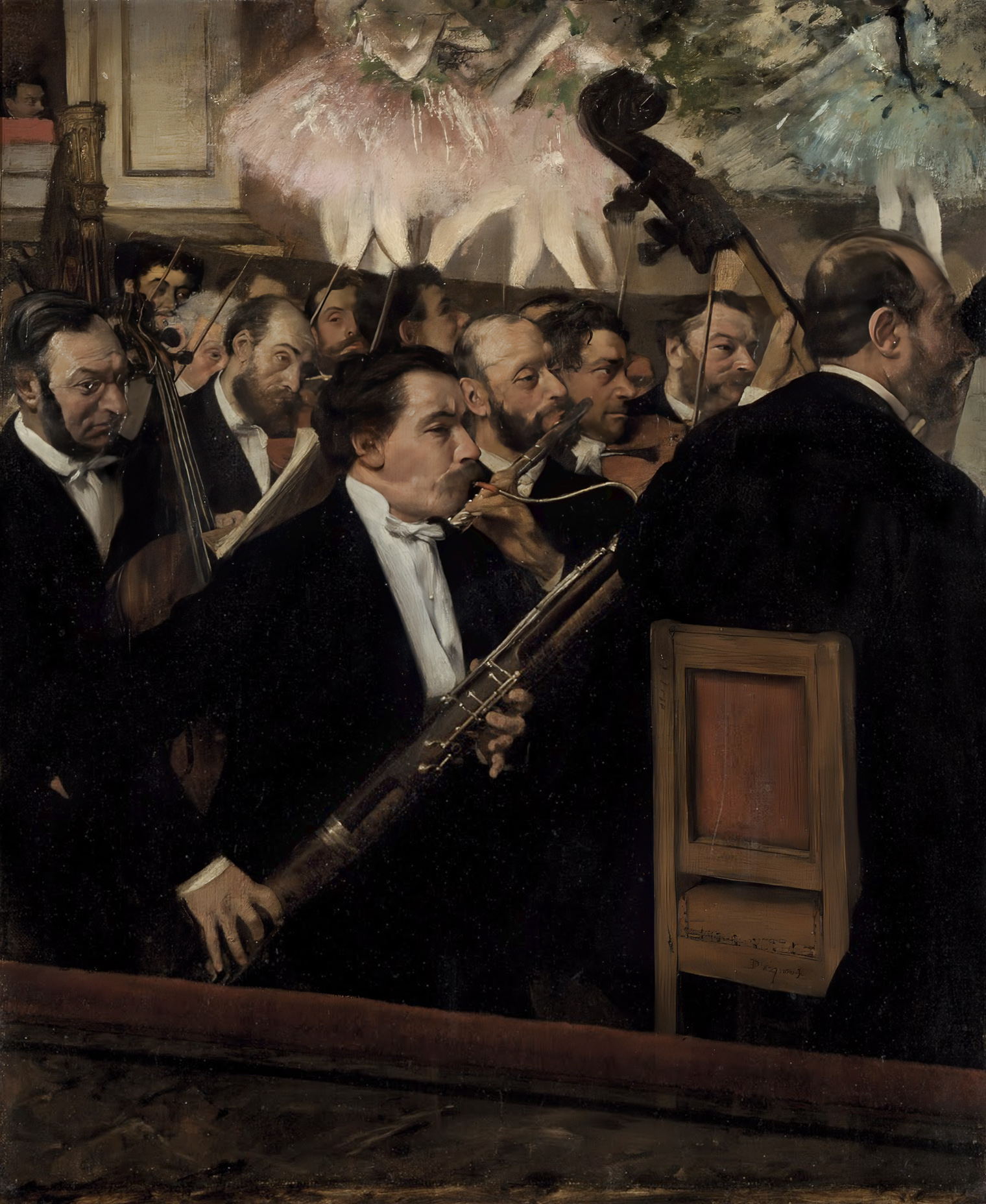
The Orchestra at the Opera | Edgar Degas, 1868 | Musée d'Orsay
Vocabulary
aerophone, brass, conch horn, didgeridoo, circular breathing, shofar, woodwind, flute, Upper Paleolithic, transverse flute, recorder, panpipe, pan flute, single reed woodwind, memet, idioglots, clarinet, double reed woodwind, oboe, English horn, bassoon
|
|
 |
 |


©Copyright 2018-26 by Peter Kun Frary | All Rights Reserved