|
.
1 | Music In The Classical Era
Social and Cultural Influences
Peter
Kun Frary
.
The Age of Enlightenment in eighteenth-century Europe marked the beginning of the late modern period. Key events include the American Revolutionary War (1775–83) and French Revolution (1789–99). The Tokugawa shogunate ruled Japan (1603–1867), while the Mughal Empire governed much of India. In 1778, James Cook landed on Kauaʻi, and Benjamin Franklin negotiated an alliance with the French. European music from 1750 to 1820 is known as the Classical Era.
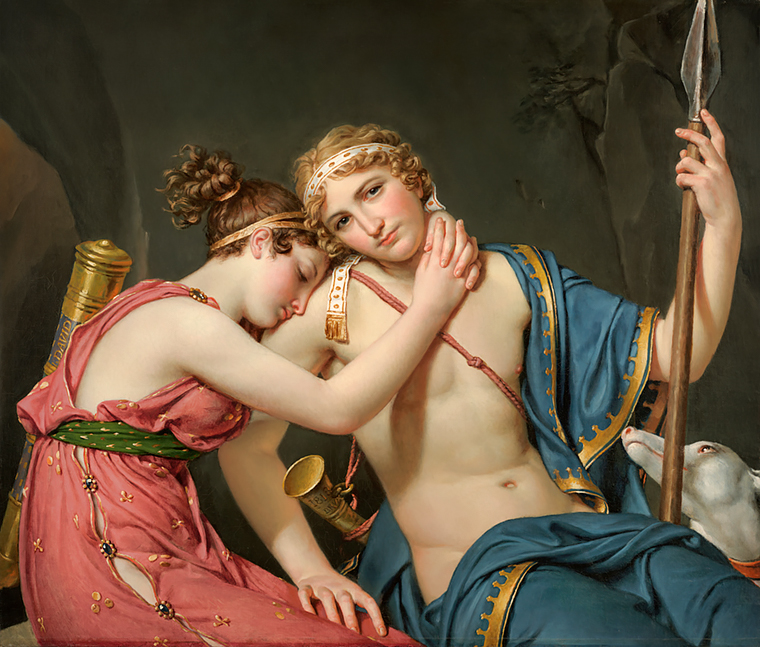
Farewell of Telemachus and Eucharis | Jacques-Louis David, 1748-1825 | Classical art was inspired by ancient Greece and Rome. | J. Paul Getty Museum
 Classical Music Definition Classical Music Definition
The term “classical music” is commonly used by laypeople to describe music that falls outside the genres of pop, rock, folk, jazz, country, hip-hop, K-pop, and World Beat. Strictly speaking, classical music refers to European art music written between 1750 and 1820, a period of classicism in art and architecture—i.e., the Classical Era.
To put classical music in context, we'll begin by surveying the basics of eighteenth century culture.
 The Enlightenment The Enlightenment
The Enlightenment, a pivotal European philosophy of the eighteenth century, questioned traditional values and doctrines, valuing reason and individualism over faith and tradition. Influenced by seventeenth-century philosophers like Descartes, Locke, and Newton, it was championed by figures like Benjamin Franklin, Goethe, Voltaire, Rousseau, and Smith.
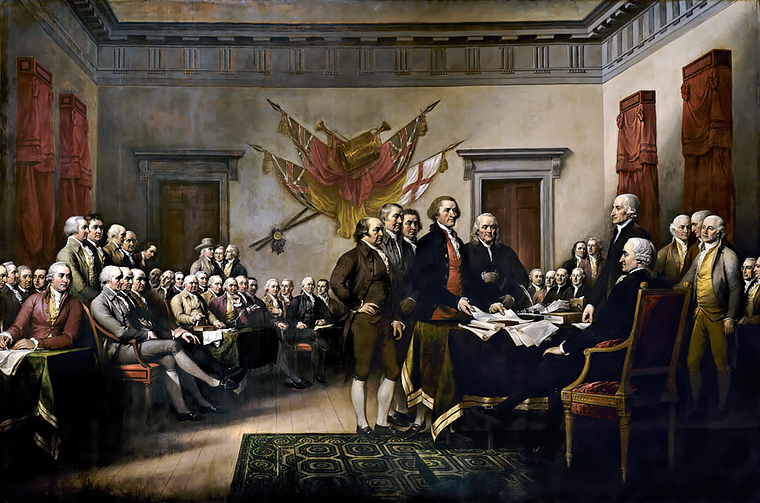
Enlightenment proponents preached individualism, universal human progress, religious tolerance, separation of church and state, public education, the scientific method, and free use of reason. These principles shaped the French and American revolutions, leading to civil rights movements, questioning of class privilege, and parliamentary reforms and democratic governments in Europe and the Americas.
Declaration of Independence | John Trumbull (1756-1843) | The American Revolution was influenced by the Enlightenment. | Wikimedia Commons
 Cosmopolitan Age Cosmopolitan Age
The Classical Era heralded the arrival of an increasingly cosmopolitan and global society. In Europe, monarchs were crowned outside of their homelands: German kings in England, Sweden and Poland, and a Spanish king in Naples. National and class differences became less pronounced due to increased travel, trade and intense colonization in Asia, Africa and the Americas.
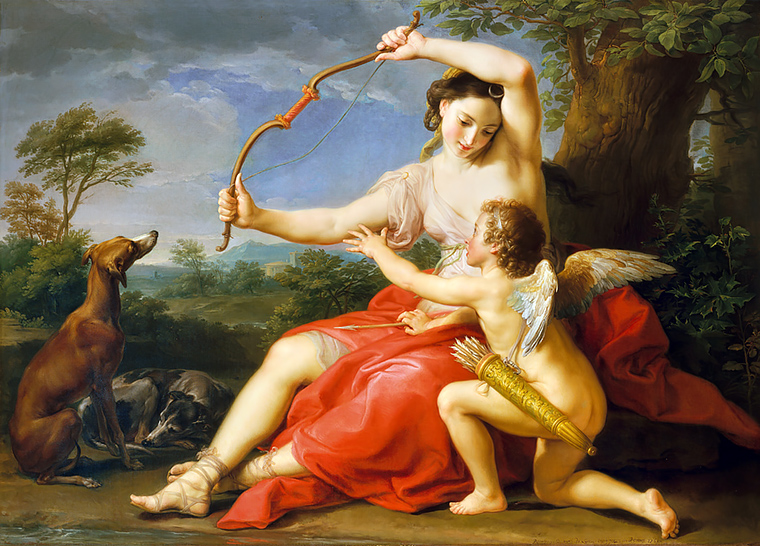
Diana and Cupid | Pompeo Batoni, 1708–1787 | Metropolitan Museum of Art
 Patronage and Political Power Patronage and Political Power
Eighteenth century Europe was characterized by the rise of monarchies with a strong centralized rule. Thus, smaller courts diminished in political and cultural influence except in northern Europe. German and Austrian courts had some independence, especially in artistic and social matters, and competed with each other in these areas.
Aristocratic patronage and, to a lesser extent, church patronage of musicians, dominated early eighteenth century Europe. By the end of the century, aristocratic power and cultural influence were in decline. Church patronage of music all but disappeared during the Classical era. As the nineteenth century dawned, the growing bourgeois or middle class largely replaced royal and church patronage through marketing of concert tickets and publication of sheet music.
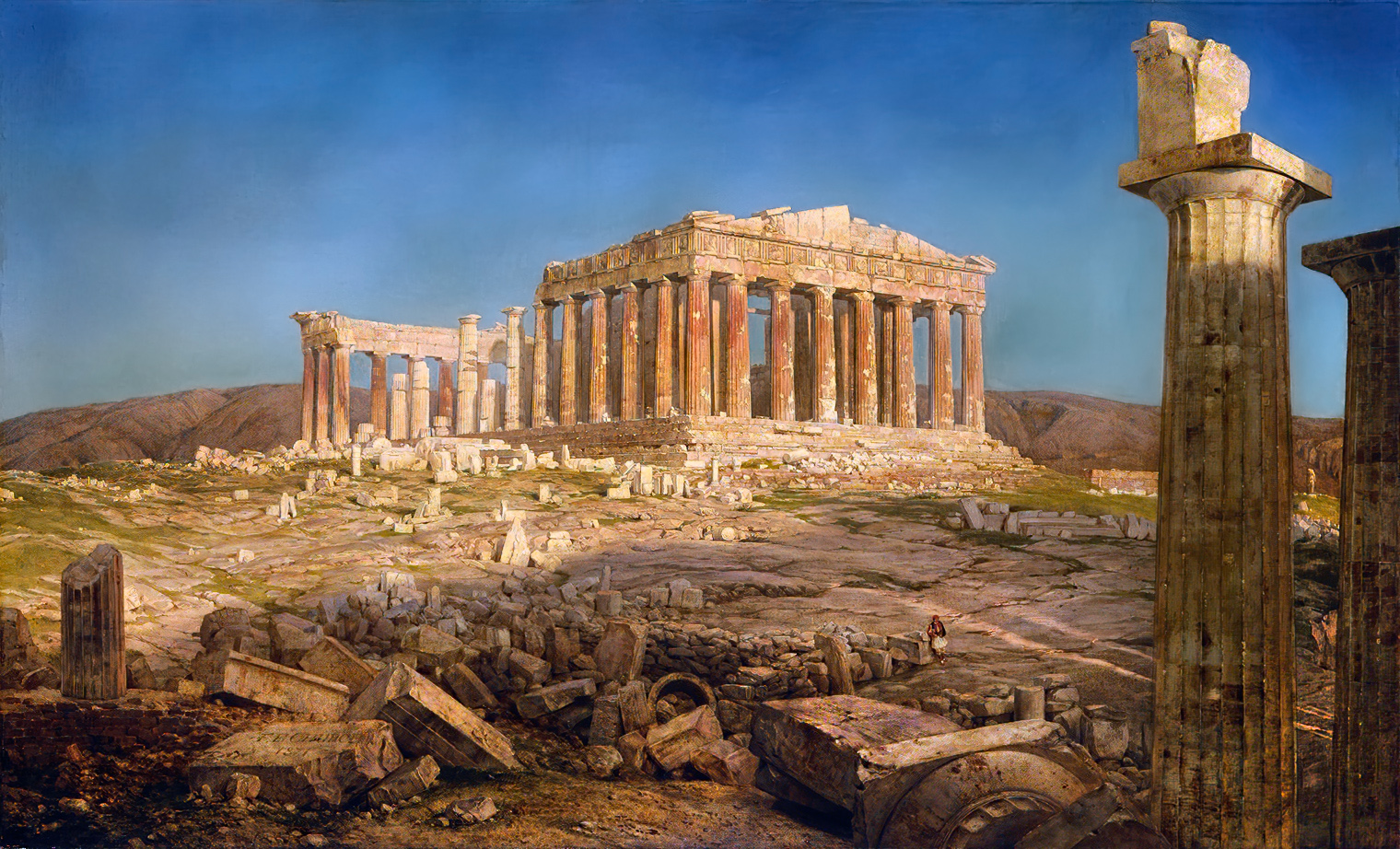
Parthenon | Frederic Edwin Church (1826–1900) | The Greek Parthenon (c. 447 BCE) influenced neoclassical architecture designs of this era, especially government buildings. | Metropolitan Museum of Art
 Popularization of Music Popularization of Music
The Enlightenment imbued the growing middle class with dreams of equality. Indeed, it was believed that everybody should be enriched by the arts, not just aristocrats. Thus, eighteenth century comic opera was performed in public theaters using native tongues and spoken dialogue with stories about ordinary folk, rather than foreign tongues in private theaters with stories about kings and gods.
Eventually the middle class market undermined noble patronage and musicians catered to popular taste. Composers learned to meet audiences on their own terms since the tastes of the noble connoisseur were not valid for the middle class.
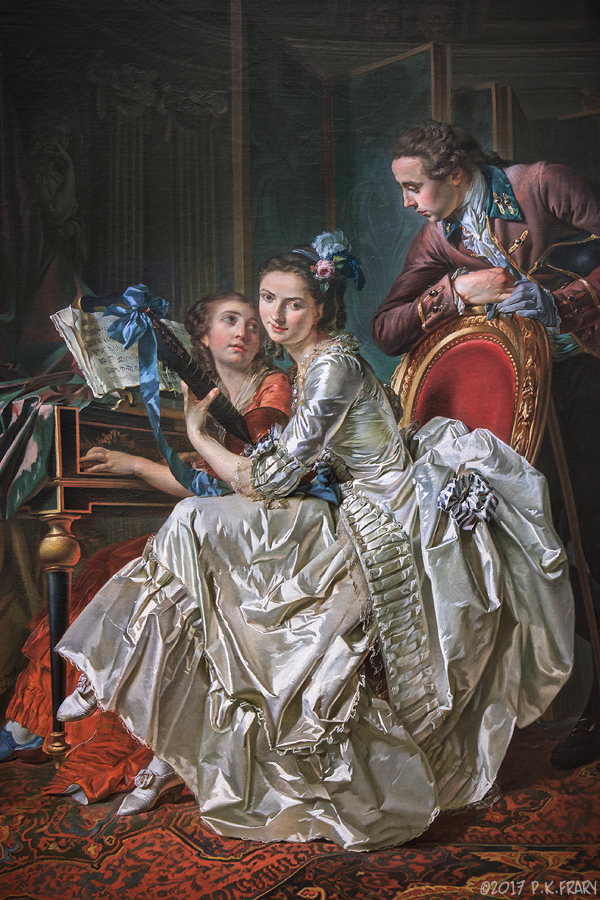
The Music Party | Louis-Rolland Trinquesse, 1746-1800 | Home music making was an essential part of 18th century life. | Alte Pinakothek | Peter Kun Frary
 Role of Music Role of Music
With the rise of the middle class, music was mainly about public entertainment. The masses preferred elegant spectacles such as opera, symphony, concerto, and ballet. Social dance music was also an important market for musicians.
Although patronage of cultured aristocrats was in decline, a market for intimate and sophisticated salon or drawing room music still existed, especially solo song, piano solo and chamber music.
Arches in Ruins | Hubert Robert (1733–1808) | Metropolitan Museum of Art

 Music Publishing Music Publishing
Home music making was an important hobby and status symbol for both the middle class and aristocrat. Subsequently, there was a burgeoning demand for printed music for amateur performance of piano and guitar solos, solo songs and chamber music. Sheet sales filled a similar niche as modern CD, LP, streaming, and download sales. Here’s a taste of music written for typical bourgeois homes:
Andante from Duo Opus 55, No. 3 | Fernando Sor, 1778-1839 (1:30)
Vocabulary
Classical Era, Enlightenment
©Copyright 2018-26 by Peter Kun Frary | All Rights Reserved
|