The nineteenth century brought vast and far reaching social change: the Second Industrial Revolution led to urbanization, increased productivity, and prosperity. Western imperialism placed much of Africa and Asia under colonial rule. It was the time of the Manifest Destiny, Civil War, California Gold Rush, and the overthrow of the Kingdom of Hawaiʻi and Puerto Rico by the United States. Fearing colonization by the West, Japan modernized during the Meiji Era, 1868-1912, emerging as a world power after defeating Russia in the Russo-Japanese War, 1904-05.
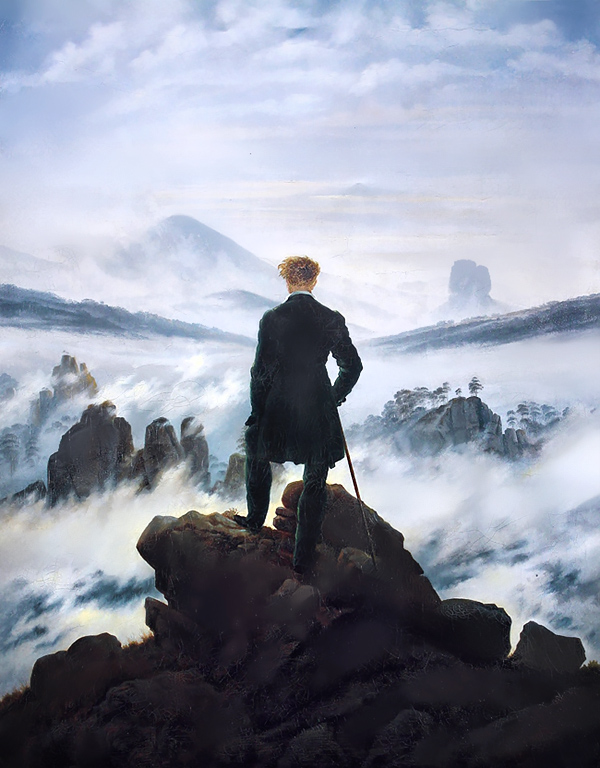
Wanderer Above the Sea of Fog | Caspar David Friedrich, 1774–1840, and other Romantics exulted the primacy of the individual and the impact of nature on human existence. | Kunsthalle Hamburg
What Was Romanticism About?
The Romantic movement, which emerged in late 18th-century European art and literature, emphasized inspiration, subjectivity, and individualism. Romantics were fascinated by the supernatural, the grotesque, the ancient past, and distant lands and cultures. Romantic music lagged a generation behind other arts: 1820 to 1900 is considered the main span of Romantic music.
Shifting Style
Germany and Austria emerged as stylistic innovators, shifting away from the dominance of France and Italy. By the mid-nineteenth century, art and literature moved towards Realism, a stylistic movement representing familiar things as they actually are. Nationalism, pride in one’s culture, and Exoticism, fascination with another culture, became pivotal mid-century movements in art, literature, and music. These movements—Realism, Nationalism, and Exoticism—existed in music, albeit music historians treat them as subcategories under Romanticism.
Carmen Opera Medley | Georges Bizet, 1838-1875 | Bizet's Carmen was a massive success, appealing to the extravagant tastes of the middle class.
Romanticism thumbed its nose at the order and restraint of classicalism and rejected the rationalism of the Enlightenment. Romanticism was characterized by dramatic thought and action but, at the same time, by contradictions: capitalism and socialism, fantasy and reality, logic and emotion, freedom and oppression, and science and faith. Romanticism emphasized emotion and individualism, glorifying the past and nature. It was diverse and less unified than previous eras.
Liberty Leading the People | Eugène Delacroix, 1798-1863 | Romantic art rejected eighteenth century neoclassicism, preferring bolder, brighter colors and dramatic motion over graceful poses. | Louvre Museum
Nineteenth CenturySociety
The Industrial Revolution transformed Western society’s social-economic structure, leading to urban migration, increased trade, and employment. The growth and power of the middle class, especially the wealthy middle class, accelerated. There was a general leveling of social classes. Aristocratic patronage waned due to a decline in noble political and economic prominence. Thus, the middle class became the musician’s primary audience.
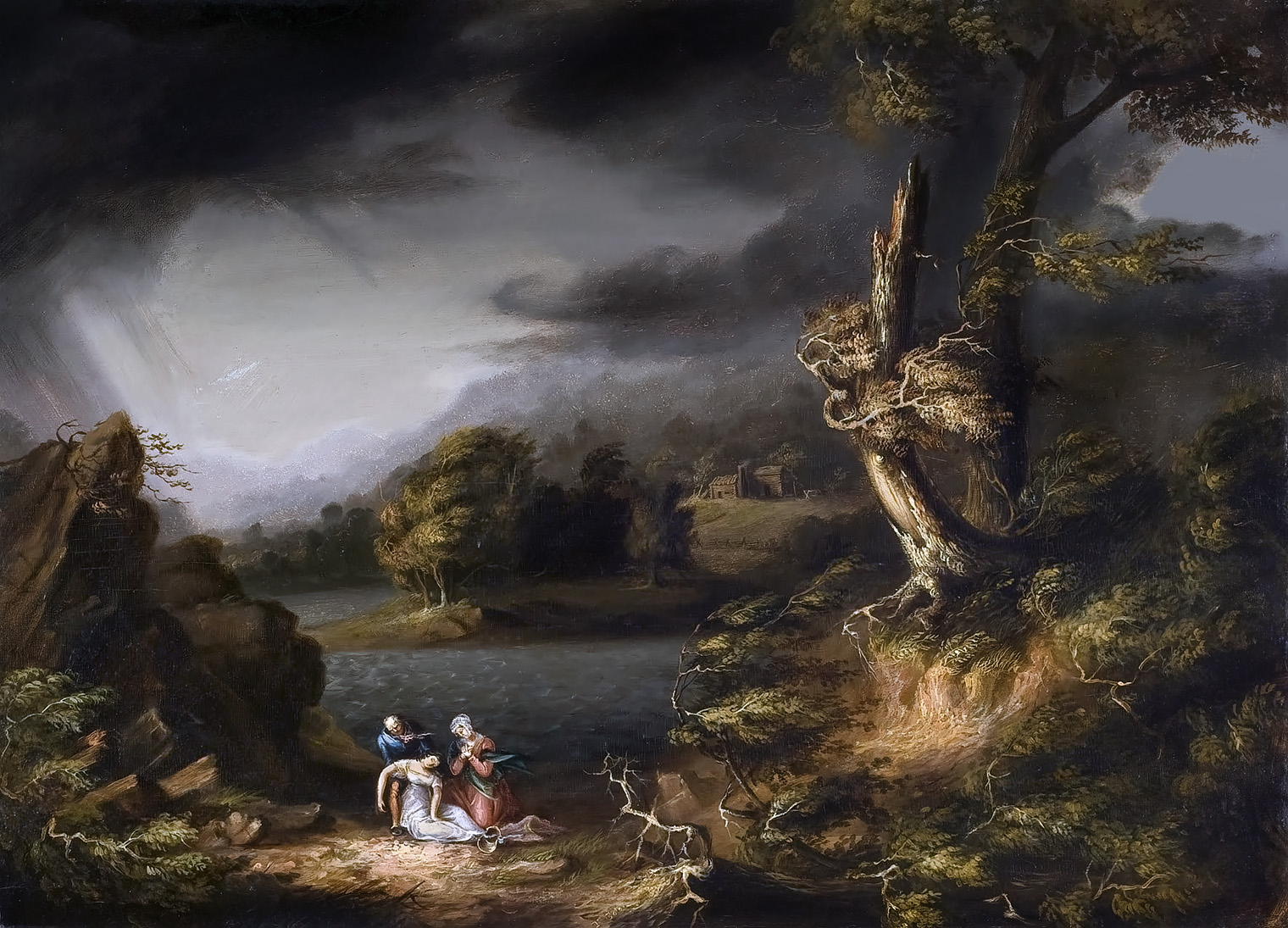
The Tempest | Thomas Cole, 1801-1848 | Nature scenes were an inspiration for Romantic art and music. | High Museum of Art
Music Industry
A shift from noble patronage to the general public created a vibrant music industry. The mainstay of musicians was the vast but unsophisticated public. Music was marketed by publishers and concert agents. Showmanship and bizarre personalities were often more important than artistry. Audiences used music as an escape from boredom, craving extravagant spectacle such as symphonies, opera, ballet, and, especially, virtuosic displays by famous personalities.
Dance
Social dance provided a vast publishing market for dance music. “Waltz King” Johann Strauss and his sons aroused the envy of many artistically progressive composers due to their full bank accounts and fame.
Caprice No. 14 | Niccolo Paganini, 1797-1828 | Paganini was among the first musicians to engender a bigger than life persona, appealing to the bizarre and lavish tastes of the middle class.
Critics
The music critic's role became important for the music industry. Critics, via print media, had the influence to cause rejection or acceptance of new works. Indeed, innovative composers were in constant conflict with critics.
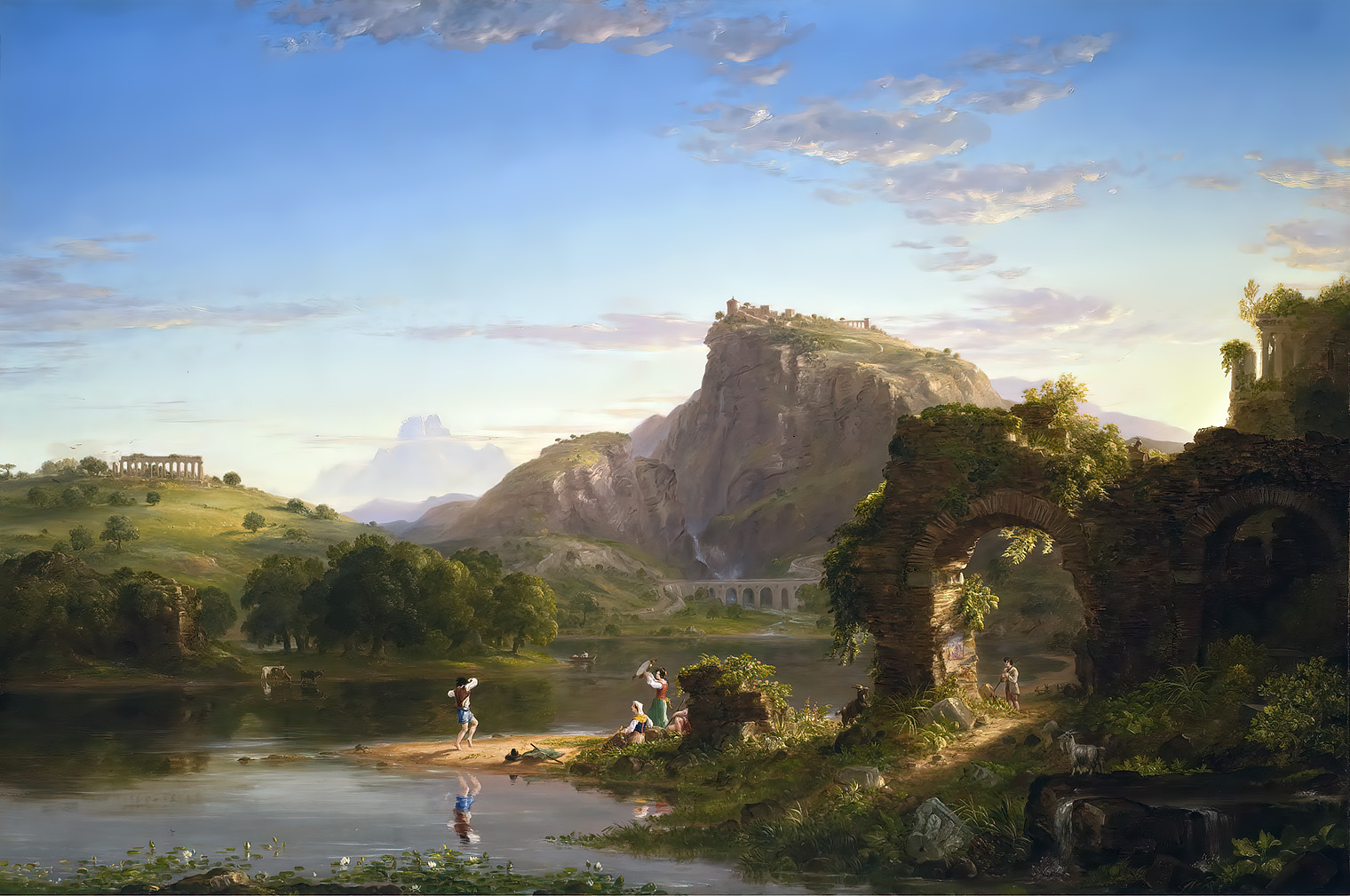
L'Allegro | Thomas Cole, 1801-1848 | Romanticism glorified the ancient past and distant lands and cultures. | Los Angeles County Museum of Art
Music Education
The nineteenth century saw the advent of music research: the study of music as an academic subject distinct from performance and composition. The scholarly study of music is called musicology.
Music Schools
Music teaching emerged as a widely recognized profession in the nineteenth century. During this era, numerous renowned conservatories and music schools were established. Moreover, the era’s most accomplished composers published extensive pedagogical materials specifically designed for advanced students.
Music at Home
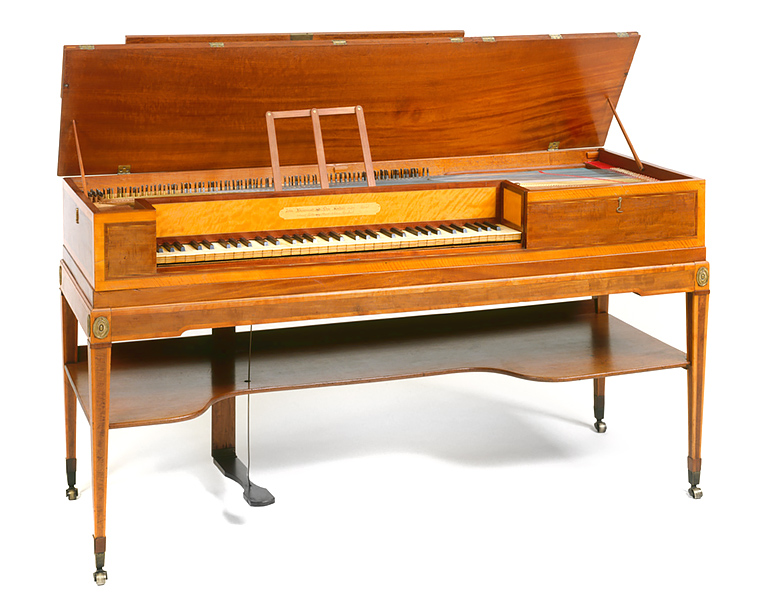
The piano, the focal point of home entertainment and a symbol of middle-class accomplishment, held immense significance during the Romantic era. Notably, pianists were celebrated figures, and the publishing industry was inundated with piano method books, “Easy and Brilliant” piano solos, and piano sheet music of the latest hits.
John Broadwood & Sons Square Piano (1797) | This compact square piano design was optimized for home use and middle class budgets. The 5-1/2 octave range was cutting edge for the era. | Metropolitan Museum of Art
Finally, here's a taste of early nineteenth century music from Northern Europe:
Serenade | Franz Schubert (1797-1828) | Schubert was linked to Romanticism due to the emotional intensity and lyricism of his music.

 What Was Romanticism About?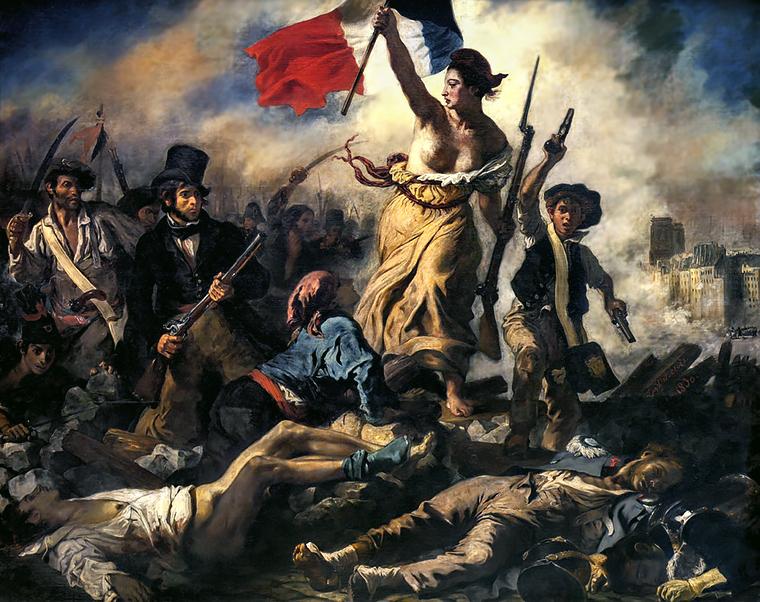
 Music Industry