|
.
1 | Music In The Middle Ages
Darkness into Light
Peter
Kun Frary
.
The Middle Ages, circa 450 to 1450 CE, began in Europe with the disintegration of the Holy Roman Empire during the fifth century. Centuries of wars, social unrest, and migrations followed. This time period is also referred to as the Dark Ages.
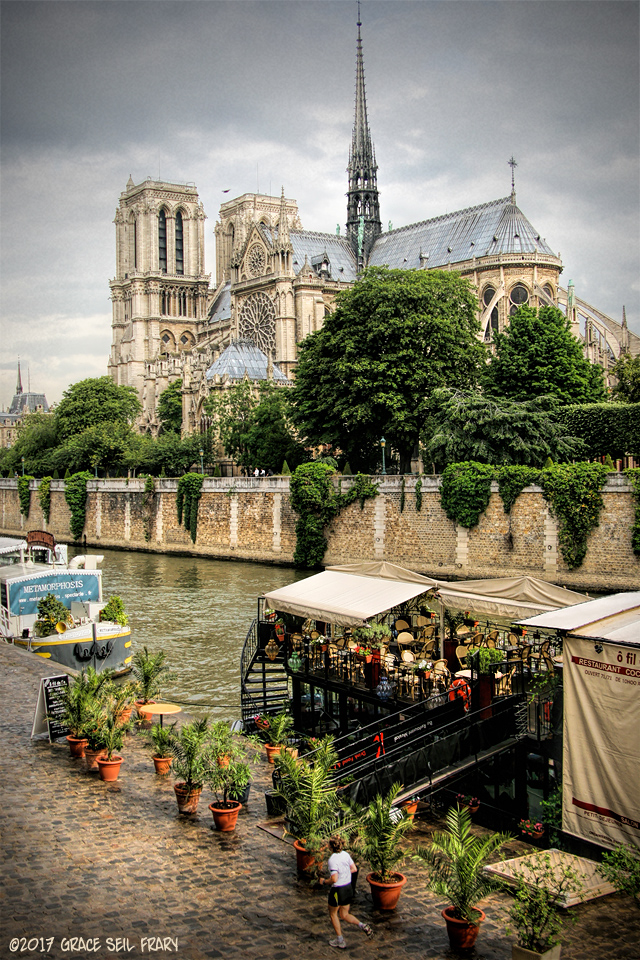
Cathédrale Notre Dame de Paris | Construction began in 1163 and took over 180 years, with completion by 1345. | ©Grace Seil Frary
 High Middle Ages High Middle Ages
The High Middle Ages, spanning the Romanesque (c. 1000-1150) and Gothic (c. 1150-1450) eras, witnessed significant cultural growth: construction of towns, churches, monasteries, and universities. Agricultural and technological advancements stimulated trade, leading to a surge in Europe’s population. This period was also characterized by external challenges: Mongol and Moorish armies invaded Europe while the Norse explored and colonized parts of North America. Marco Polo’s journey to China captivated generations of explorers, inspiring them to venture to distant lands and bring back a wealth of new food, materials, technologies, and tales of distant lands and cultures.
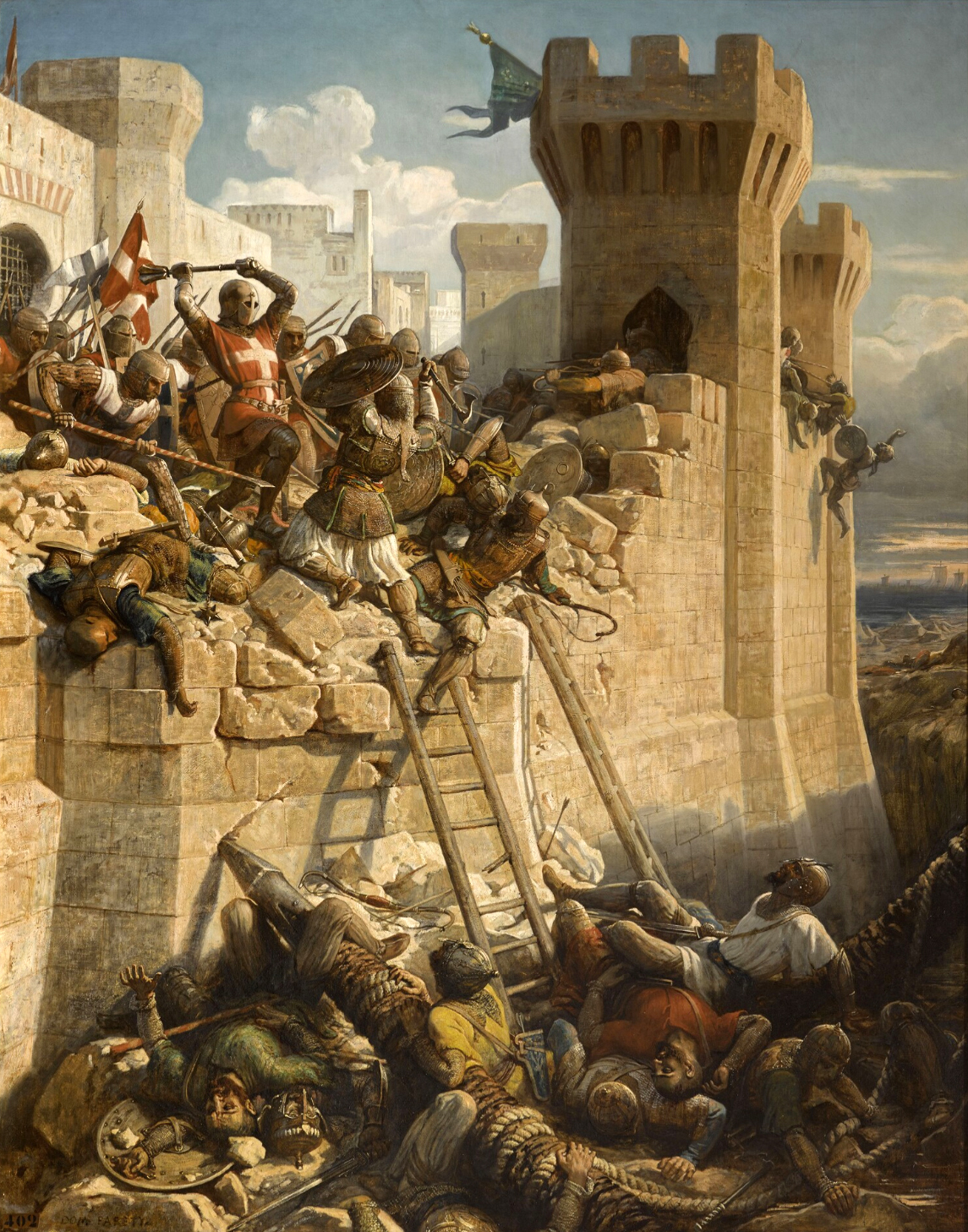
Siege of Acre | Dominique Papety (1815-49) | Crusaders (Hospitalier) defending the walls of Acre (Israel) in 1291. | Wikimedia Commons
Religious Politics
The High Middle Ages saw religious conflicts, both theological and military. The Great Schism of 1054 severed communion between the Roman Catholic and Eastern Orthodox Churches. The Vatican directed military campaigns, the Crusades, to reclaim the Holy Land and gain political and territorial advantages in Asia Minor and the Middle East. The sacking of Constantinople in 1204, ordered by Pope Innocent III, included the shameless pillaging of Greek Orthodox churches and massacre of Orthodox Christians.
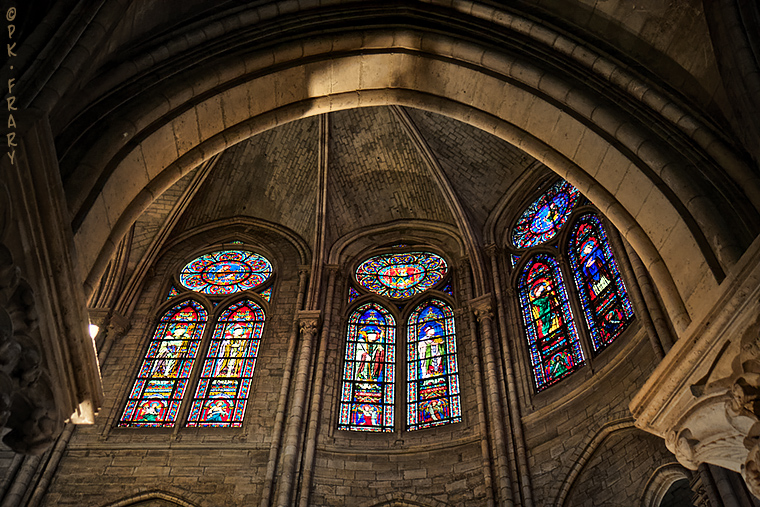
Cathédrale Notre Dame de Paris | Gothic stained glass | ©Peter Kun Frary
 Life in the Middle Ages Life in the Middle Ages
Medieval European society consisted of three social classes: nobility, clergy and peasantry. Most of Europe's population were peasants: bound to the soil with subsistence farming and subject to feudal overlords. Peasants rarely owned property, were illiterate and had a life expectancy of about thirty years.
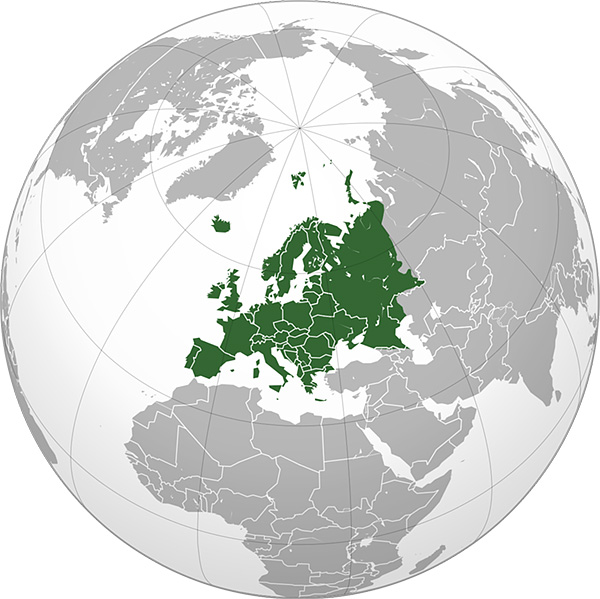
Europe | Wikimedia Commons
Nobility served as overlords of local lands, extracting goods and services from peasants living on their lands. These feudal overlords controlled the local military but themselves were subject to higher ranking nobility.
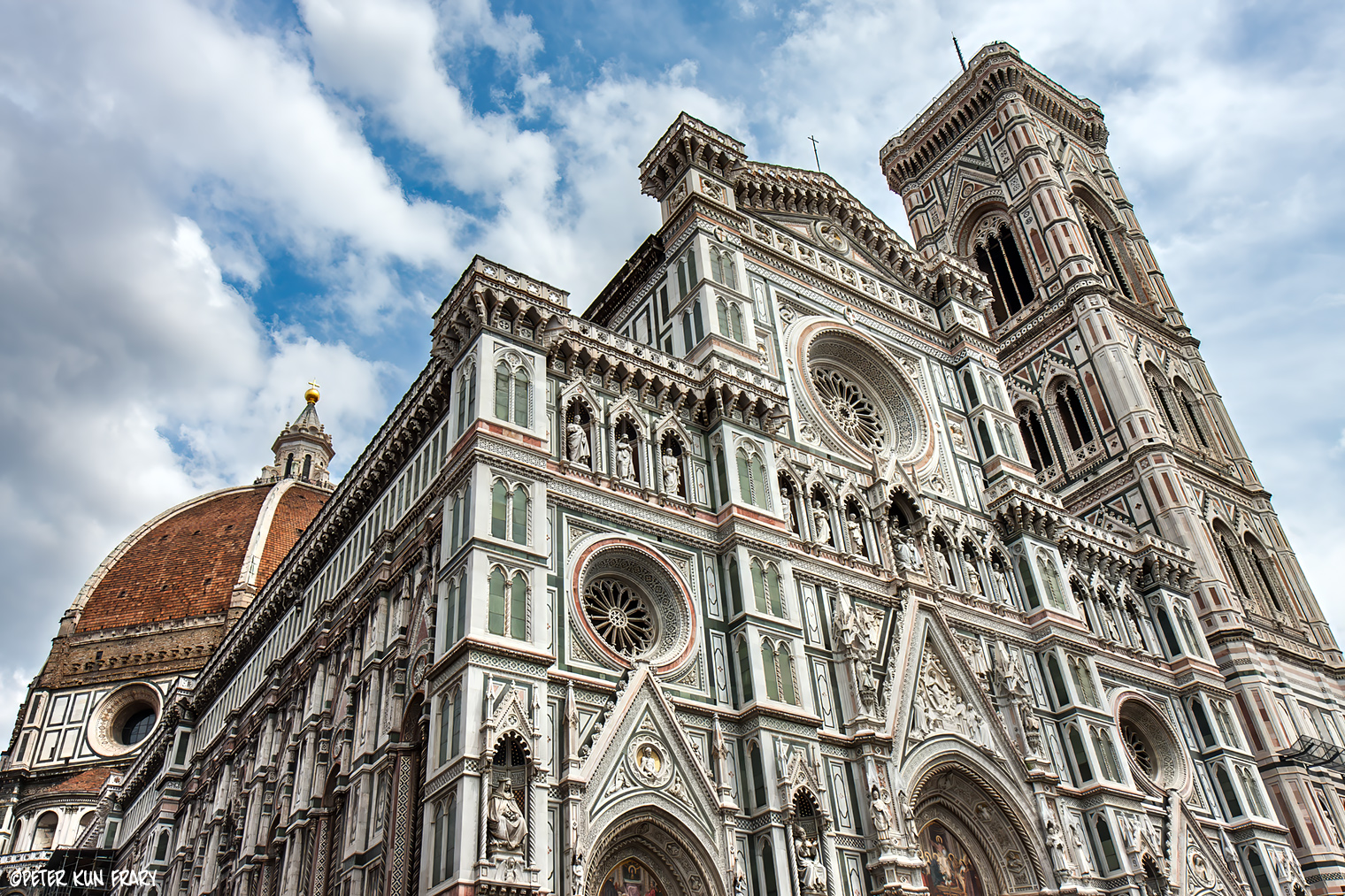
Basilica di Santa Maria del Fiore (1296) | Florence, Italy | ©Peter Frary
 Roman Catholic Clergy Roman Catholic Clergy
Clergy, the Illuminati of the Roman Catholic Church, wielded immense power, wealth, and influence, rivaling or exceeding the nobility in political and military might. The Papal States, ruled by the Pope, controlled most of Italy and parts of France from the eighth to nineteenth centuries.
Education in Europe was centered around the Catholic Church, leaving most people, including nobility, illiterate. Consequently, historical records of this era are primarily from Church archives. The lone exception is Medieval Spain.
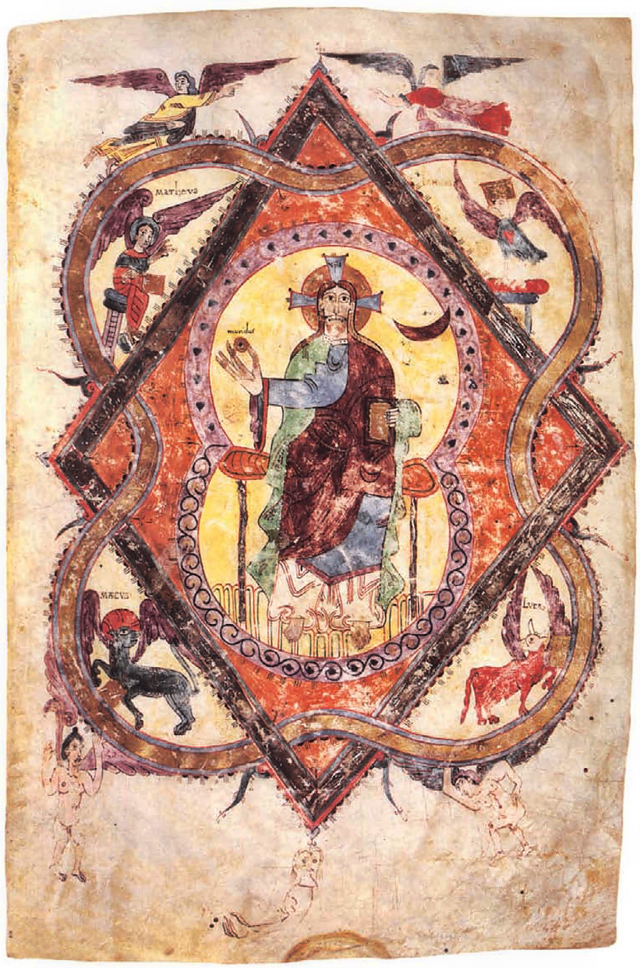
Christ in Majesty | Beatus of Fernando and Sancha (1047) | Biblioteca Nacional
 Al-Andalus (الأَنْدَلُس) Al-Andalus (الأَنْدَلُس)
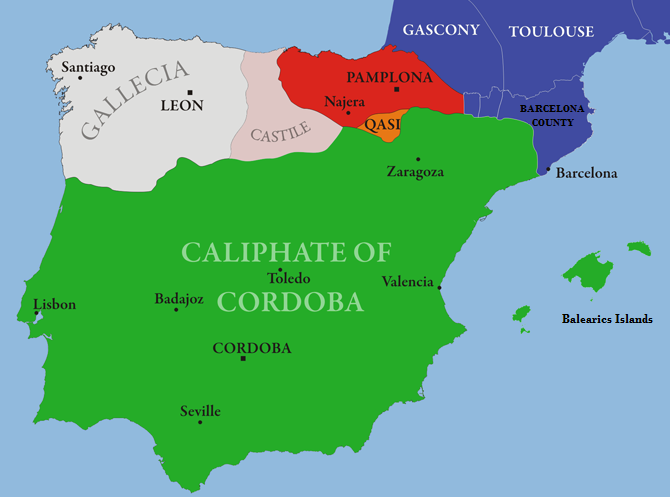
Medieval Spain and Portugal were called Al-Andalus, an Islamic state controlled by Moorish Kings—Berbers from Morocco—for eight centuries (711-1492). It was a more international and enlightened society than most of Medieval Europe, famous for art, architecture and centers of learning. Al-Andalus boasted a large population of Jews, Muslims and Christians living together in relative peace.
Al-Andalus | Moorish Kings ruled most of the Iberian Peninsula (green area), currently Spain and Portugal, for eight centuries. | Wikimedia Commons
Cross-cultural Influence of Al-Andalus
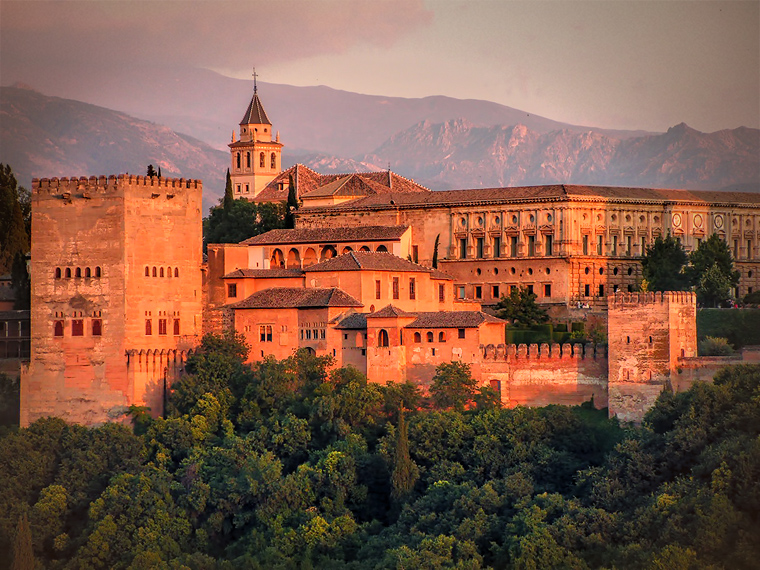
The cross-cultural influence of the Islamic world on Spain and eventually all of Europe was vast. The tourist destinations of the Alhambra at Granada and Great Mosque at Cordoba are visible manifestations of this heritage. Every aspect of European culture from food to language, mathematics, art, literature, religion, science, music, medicine and philosophy were influenced by Spain's eight centuries of Muslim rule.
Alhambra | Alhambra was built near the end of Spain's Muslim rule by Yusuf I, 1333–1353, and Muhammed V, 1353–1391. | Wikimedia Commons
Moorish kings kept detailed records, built great libraries, and founded a university at Córdoba. They brought new technologies, advanced mathematics, Arabic numerals, and modern architecture to Europe. Without their contribution, we'd be stuck with Roman numerals! The Moors were also responsible for bringing many musical instrument families, including bowed strings, winds, and guitar and lute prototypes, to Europe.
The Capitulation of Granada | Francisco Pradilla Ortiz, 1848–1921 | Painting of the 1492 surrender of Granada's last Moorish king | Wikimedia Commons
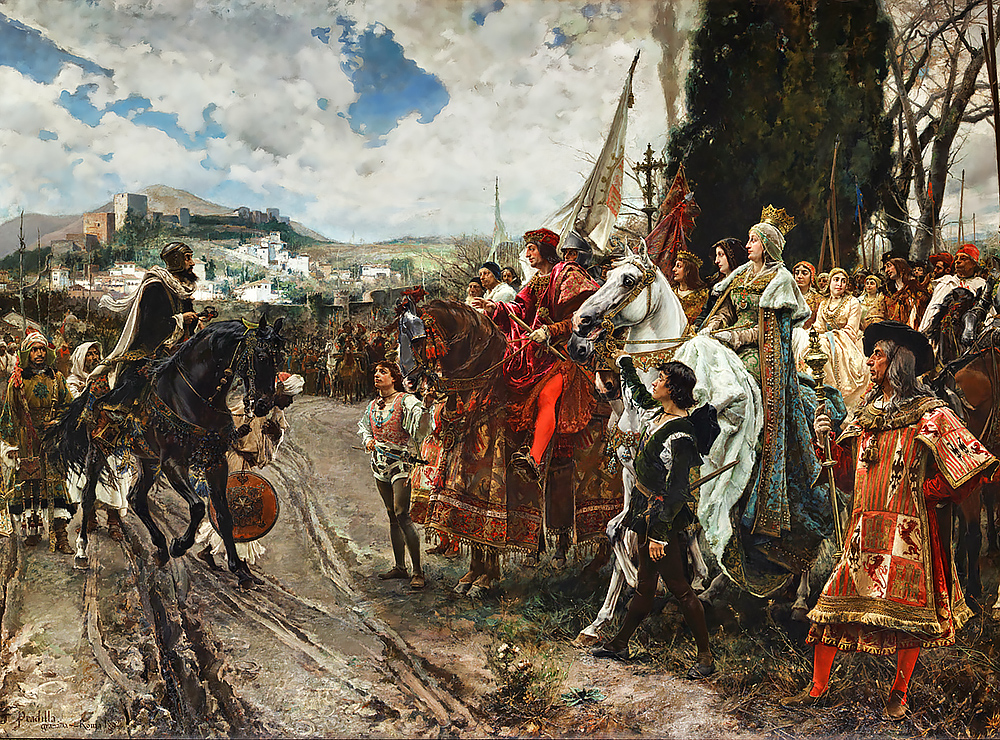
Al-Andalus faded from power in 1492 with the fall of the last Moorish city, Granada, to Ferdinand II and Isabella I. However, eight centuries of Islamic culture still echo in Spanish music and may be observed in Spain's many architectural treasures and art. I am grateful for the introduction of the guitar family and not having to use Roman numerals for math!
Vocabulary
Middle Ages, Romanesque, Gothic, High Middle Ages, Al-Andalus, Moors
©Copyright 2018-26 by Peter Kun Frary | All Rights Reserved
|
 •••
•••