 ••• •••
|
||||||||||||||||
|
1 | Music In The RenaissanceExploration, Rebirth and HumanismPeter Kun Frary
.
|
 Renaissance Culture
 Humanism
 Holy Roman Empire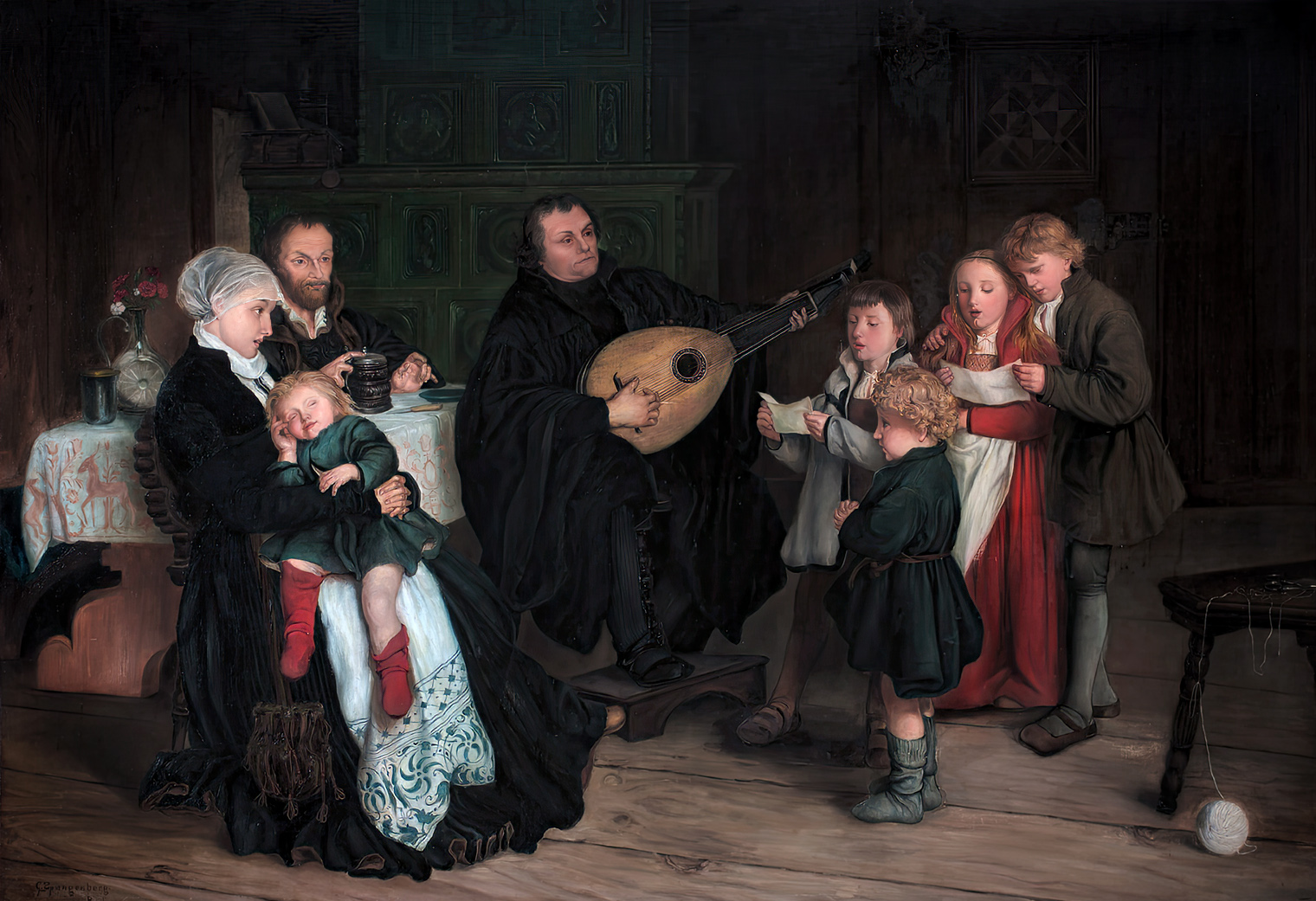
 Protestant Reformation
Changes in TheologyMartin Luther preached the doctrine of justification by faith, rather than by works, and railed against papal authority and the sale of indulgences. A prolific song writer, Luther penned the iconic hymn, A Mighty Fortress is My God (Ein feste Burg ist unser Gott), often referred to as the "Battle Hymn of the Reformation." Congregational Singing Luther introduced congregational singing in the vernacular—men and women singing together in church using their native language—and encouraged use of musical instruments in church. His reforms were revolutionary since, at the time, the Catholic Church only allowed a cappella singing in Latin by male cleric musicians. Although Latin was used in Lutheran services, German was increasingly preferred for singing, preaching and Bible studies. The role Luther granted to instrumental music and mixed choral singing in church greatly enhanced the development of music in Germany and Northern Europe. |
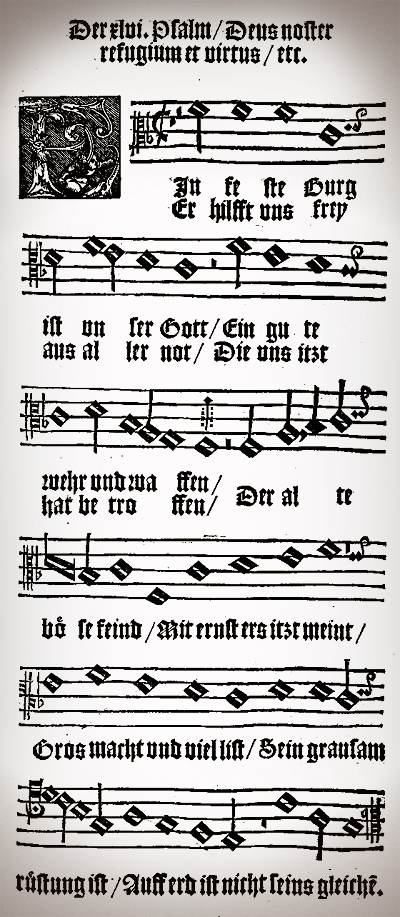
A Mighty Fortress is Our God | John Cavicchio, arr., plays an organ Chorale Prelude based on Luther's hymn (5:26).
Voyages of Discovery
The decline of the Roman Catholic Church and Holy Roman Empire paved the way for European art and culture. Christopher Columbus’s (1492), Ferdinand Magellan’s (1519), and other explorers’ voyages brought riches and opportunities to Europe’s port cities. The new economy created a large and powerful middle class, known as the merchant class or bourgeoisie, a social class between nobility and peasantry. This class was destined to be consumers of art, music, and literature.
The Renaissance marked the dawn of globalization. During this era, European powers and, subsequently, their former colonies, began political, economic, and cultural colonization of the world.
Book Publication
Education—no longer a monopoly of the Church—became accessible to the general public due to the printing press and the rise of a middle class with leisure time. Nobility and the middle class valued education for its pride and status, and musical abilities were seen as a sign of high education and class standing.
Printing Press
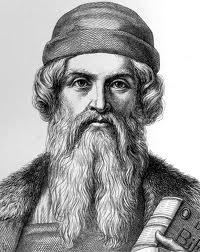
The invention of the printing press in 1450 by Johannes Gutenburg (1398-1468) revolutionized book production and accelerated the spread of culture. Prior to 1450, books were produced by hand, making book ownership and literacy expense. Although the Bible was the first mass produced book, musical scores soon ensued, bringing music to the burgeoning merchant class.
Moses | Michelangelo, 1475-1564 | Moses depicted with horns due to a poor Bible translation. | Basílica de San Pietro in Vincoli, Roma | ©Peter Kun Frary

 Patronage of Art and Music
The Roman Catholic Church, once a major patron of the arts, faced reduced resources and influence during the Protestant Reformation. Consequently, musical activities shifted to royal courts, which employed ten to sixty musicians for entertainment and chapel duties. While considered servants by noble patrons, professional musicians enjoyed a higher status in Renaissance society than during the Middle Ages. They were recognized as creative individuals and signed their works.
Vocabulary
Renaissance, Humanism, Protestant Reformation, Martin Luther, merchant class, middle class, bourgeoisie, Johannes Gutenburg
|
|
 |
 |


©Copyright 2018-26 by Peter Kun Frary | All Rights Reserved