 ••• •••
|
||||||||||||||
|
3 | Music In The RenaissanceSacred Vocal PolyphonyPeter Kun Frary
.
|


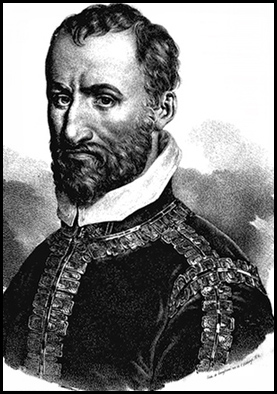 |
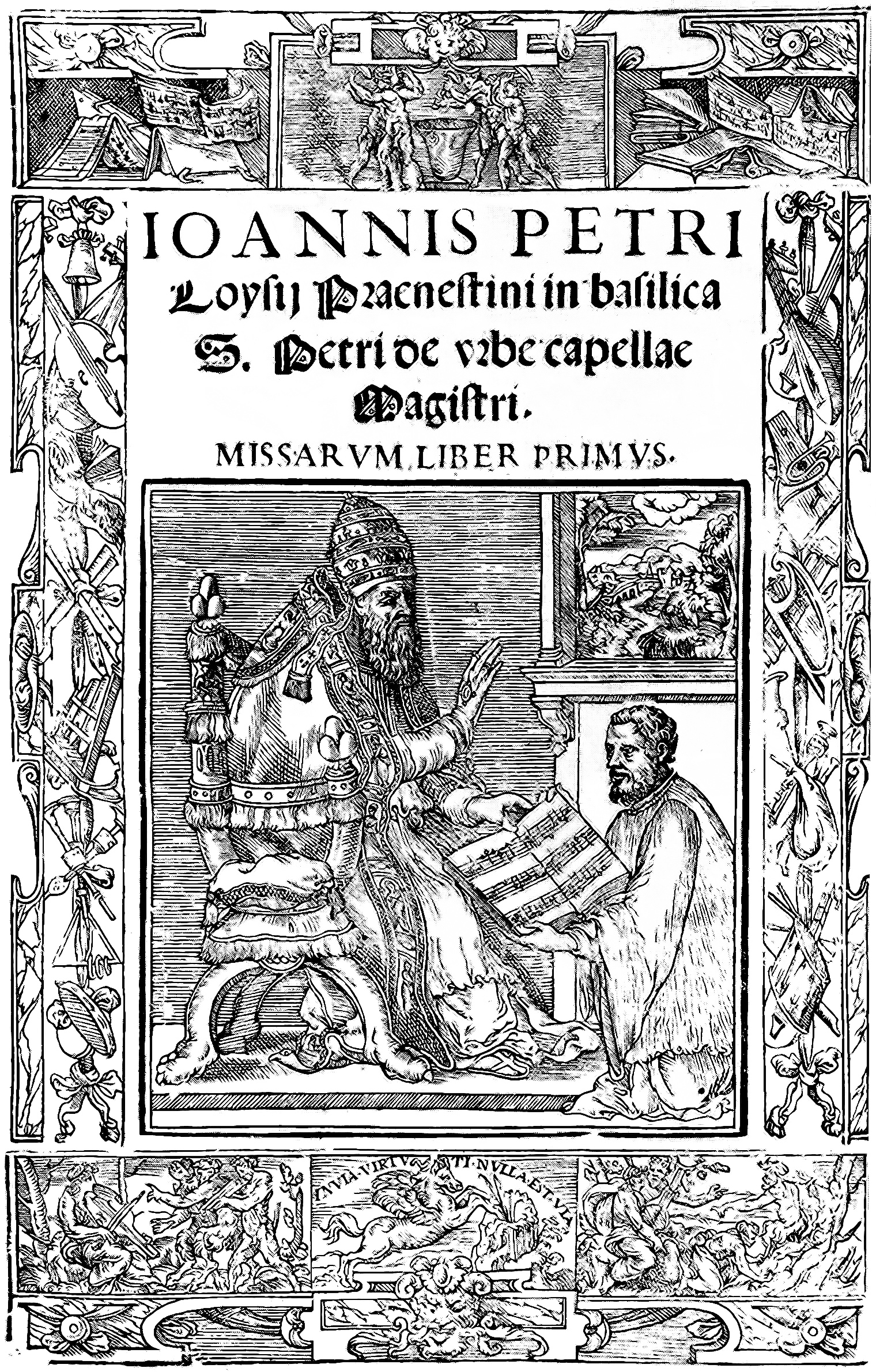
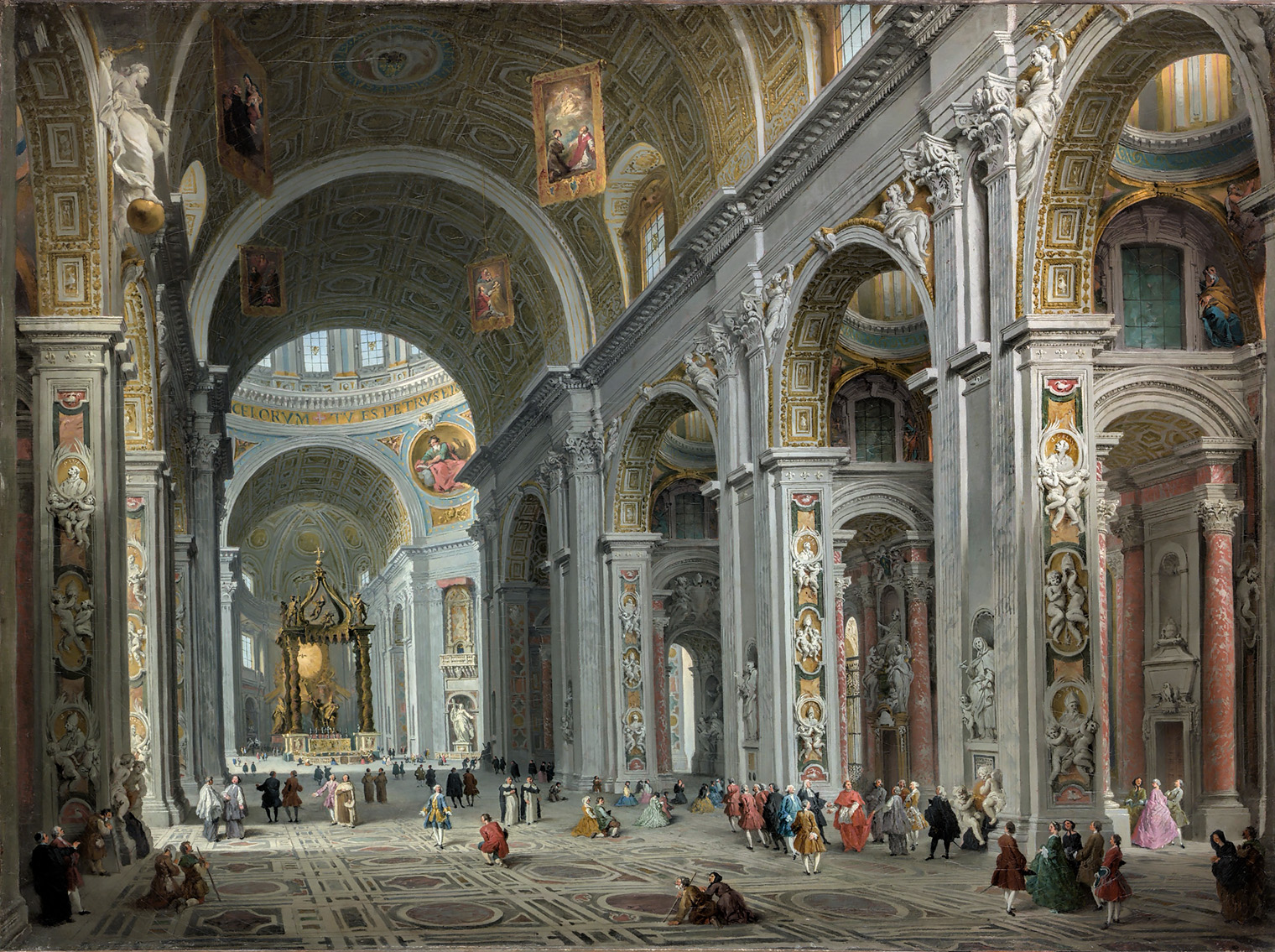
The leading composer of sacred vocal polyphony in the Roman school was Giovanni Palestrina (1525-94). He served as choirboy, organist, and choir director in his hometown of Palestrina. In 1550 the Bishop of Palestrina was elected as Pope Julius III and took Giovanni with him to the Vatican. At the age of twenty-six, Giovanni became choir director at St. Peter’s Basilica in Rome. Although Giovanni Palestrina dabbled in secular forms, he mainly wrote sacred music: one hundred two masses, four hundred fifty motets, and many hymns. His music reflects the Renaissance ideals of clarity, balance and expressiveness. |
For the remainder of his life, Palestrina assumed leadership positions within the Papal Chapel. He was offered lucrative secular positions, including one from the emperor of the Holy Roman Empire, but remained in Rome composing, teaching at the Jesuit seminary, and directing music.
Palestrina died in Rome in 1594 and, as was the custom of the time, buried on the day of his death. His coffin was inscribed with Libera me Domine (Liberate me, Lord) and laid to rest beneath the floor of St. Peter's Basilica.
Saint Peter's Basilica Nave | Giovanni Paolo Panini, 1691–1765 | Palestrina was choir director at St. Peter's Basilica. | Metropolitan Museum of Art
 Pope Marcellus Mass
Palestrina's best known work, the Pope Marcellus Mass, written during 1562 and 1563, was dedicated to Pope Marcellus II. It is scored for six voices in a polyphonic texture filled with imitation—echoing of melodic motives. Mass was sung by men and boys (women were not permitted to sing mass until 1953). Soprano and alto parts were sung by prepubescent boys, countertenors (men singing falsetto), or castrati (castrated adult singers).
Kyrie
The first movement of the Pope Marcellus Mass, Kyrie, is through-composed, meaning it is written without musical repetition of verses or stanzas. It comprises three distinct sections.
- Kyrie eleison (Lord have mercy on us)
- Christe eleison (Christ have mercy on us)
- Kyrie eleison (Lord have mercy on us)
Mass Lyrics
How did worshipers understand lyrics with six layers of counterpoint? The lyrics, despite being presented within a polyphonic texture, were understood because voices were skillfully combined to avoid distracting from word clarity. Plus, mass lyrics were simple, few, and parishioners grew up hearing them every Sunday.
Pope Marcellus Mass | Kyrie beginning (soprano) | Wikimedia Commons
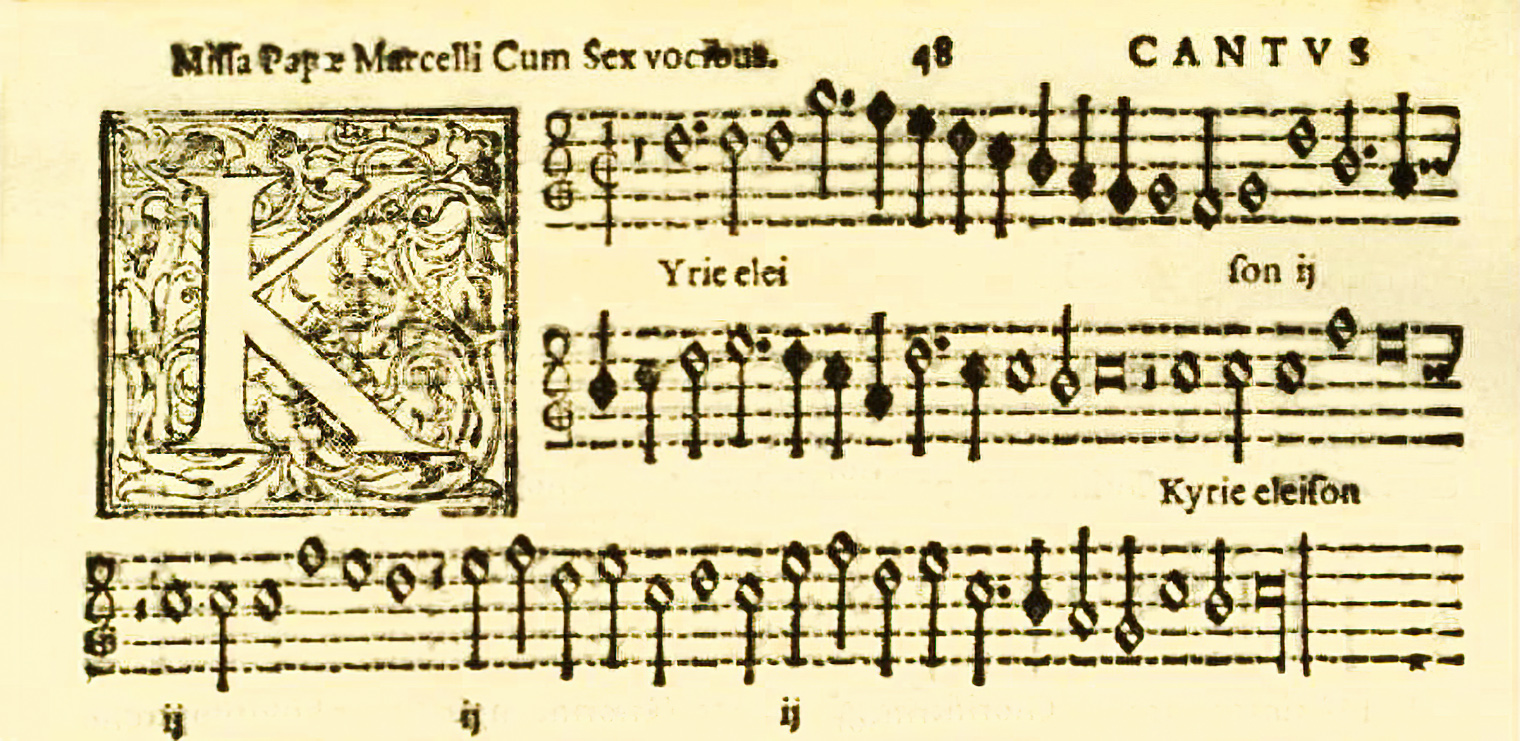
The first phrase of the above in modern notation. Note the smoothly flowing style of stepwise motion and small skips.

After the soprano voice begins the opening phrase, the other six voices enter, imitating the initial melody and weaving a web of counterpoint as other voices enter. Palestrina’s writing style became the textbook model of Renaissance counterpoint, studied by music students for centuries after his death. Listen to this performance of Kyrie from Palestrina's Pope Marcellus Mass:
Pope Marcellus Mass: Kyrie | Giovanni Palestrina
Vocabulary
cantus firmus, Palestrina, countertenor
|
|
 |
 |


©Copyright 2018-26 by Peter Kun Frary | All Rights Reserved