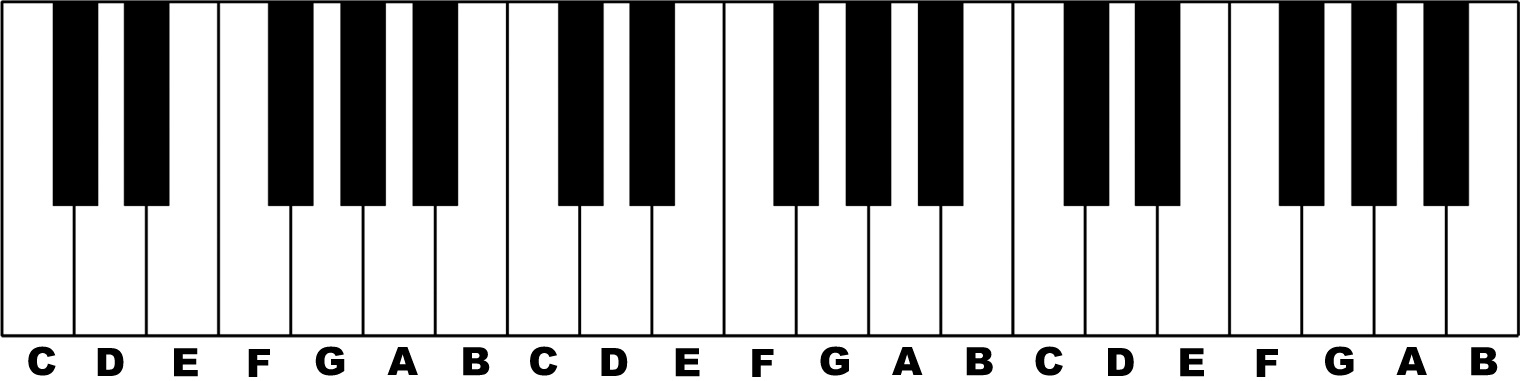
Keyboard instruments come in many sizes and shapes but all use a keyboard as a control interface: a row of levers pressed by the fingers. The piano is the most common keyboard instrument.
Keyboard | Control interface for piano, organ and related instruments
Sounds from the keyboard family vary greatly: pipes, reeds, plucked strings, hammered strings, bells and electronics. When classified according to sound production, pianos are chordophones due to use of vibrating strings, whereas pipe organs are aerophones because of the vibrating air columns within pipes.
Most of the keyboard family is capable of producing both melody and harmony simultaneously, making them a favorite tool of arrangers and composers.
The organ, the oldest keyboard instrument, uses air flowing through pipes to produce sound, making it an aerophone. An ancient aerophone, the panpipes, is the direct ancestor of the pipe organ.
Panpipe | Andean siku made from bamboo and bound with fabric. | Adobe Stock
Hydraulis
An ingenious method of connecting a keyboard, valves, and an air supply to large panpipe tubes was invented by Ctesibius, a Greek inventor and mathematician living in Alexandria, Ptolemaic Egypt circa 300 BCE, about 2300 years ago. Ctesibius named his invention the hydraulis.
Hydraulis | Justus Willberg plays a reconstruction of a circa 228 CE hydraulis found in Aquincum (1:34).
The hydraulis was widely used in ancient Greece to provide music for wealthy households, religious ceremonies, imperial processions, gladiatorial contests, and sporting events.
Rome
Nero (37-68 CE), a Roman emperor and persecutor of Christians, introduced the Greek invention to Rome in 67 CE and was known to be a skilled player. Indeed, the organ symbolized the power and affluence of the Roman upper class. As in ancient Greece, Roman organs were loud enough to be played in coliseums and typically served as entertainment in theaters, gladiatorial contests, and banquets.
Cross-Cultural Exchange
Through cross-cultural interaction and exchange with Rome, Greece, and the Byzantine Empire during the early medieval era, the organ spread throughout Europe and the Middle East. By the fifteenth century, organs assumed a prominent role in the liturgy of the Catholic Church.
Medieval Organ | The men on the sides are pumping air for organ operation. From the Utrecht Psalter, c. 850 CE. | Utrecht University Library
Air Powered
Organ pipes need air to sound and, prior to electric pumps, air flow was created for large church organs with bellows pumped by boys inside the organs!
Organ (1692) | A German household organ (regal) built by Simon Bauer. To produce sound, somebody pumped the bellows. | Museum of Fine Arts
Control Surfaces
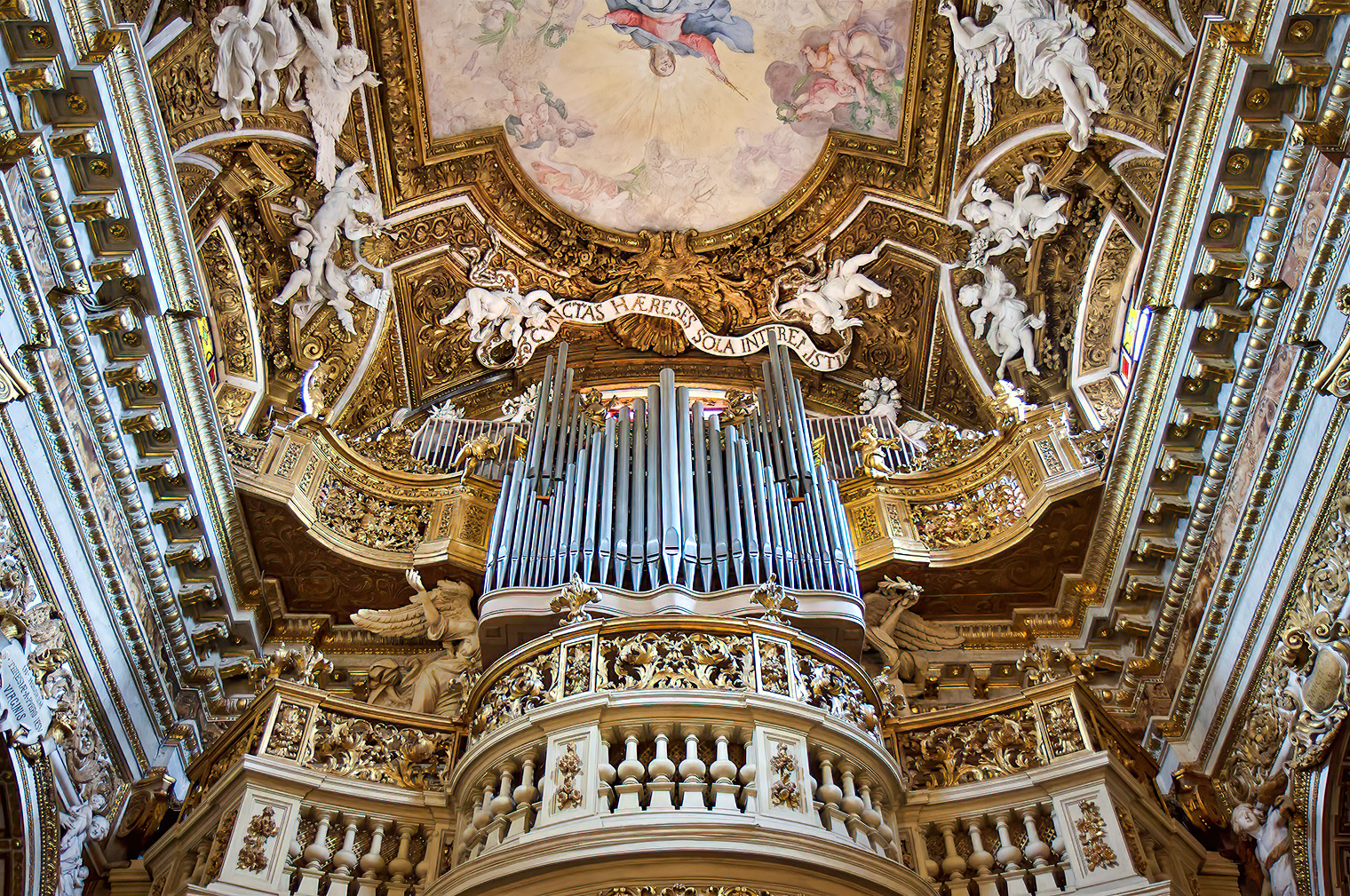
Although small single-keyboard organs were popular for home use, organs designed for large churches typically have multiple keyboards for the hands and a pedal keyboard for the feet. Multiple keyboards allow playing of multiple banks of pipes. Each bank of pipes has a different timbre, such as flute, reed, brass, etc. Banks of pipes may be switched by opening and closing knobs called stops. Organists mix the various pipe timbres for expression and dynamic control.
Harpsichord | Alessandro Trasuntino, c. 1531 | Harpsichords were a prestige object and popular in households during the Renaissance and Baroque. | Royal College of Music Collection
Harpsichord
The first harpsichords appeared during Europe's late Middle Ages, with the earliest references dating to 1397 CE. By the Renaissance, the harpsichord had become an immensely popular household instrument, serving a function akin to that of the modern piano.
Cross-Cultural Interaction and Exchange
The harpsichord evolved from the Arabic qānūn (psaltery), a hand-plucked harp-like zither introduced to medieval Europe from the Middle East. The qānūn is still played in the Middle East, North Africa, and parts of Asia. Europeans simply invented a keyboard mechanism to pluck the strings of the qānūn and placed the harp-like frame inside a wooden box, giving birth to the harpsichord.
Qānūn | The qānūn, called a psaltery in medieval Europe, looks similar to the inside of a harpsichord or piano. | Metropolitan Museum of Art
Harpsichord Versus Piano
The harpsichord precedes the piano by three centuries but shares a similar form factor. A plectrum mechanism (quill) plucks harpsichord strings, whereas pianos strike the strings with a hammer. Harpsichord tone is softer, shorter in sustain and more metallic than the piano. Harpsichords are incapable of graded dynamics (e.g., crescendo and diminuendo) since the keys do not respond to pressure.
Introducing the Harpsichord | Mr. Devine discusses the harpsichord (2:55)
Although the harpsichord was a popular household instrument in sixteenth- and seventeenth-century Europe, its star began to fade with the advent of the piano.
Piano
The piano was invented during the early eighteenth century by Italian luthier Bartolomeo Cristofori (1655-1731). Although similar in appearance to a harpsichord, the piano uses felt hammers to strike the strings instead of plucking with a quill. Hammers produce a darker tone and longer sustain than quills.
The original name was piano e forte (soft and loud), because, unlike the harpsichord, it was able to produce dynamics from piano to forte. Dynamics are controlled by striking the key harder or softer. Eventually the name was shortened to pianoforte but is called the piano (soft) in North America albeit modern designs are louder than ever!
Étude in C Minor, Op. 10 No.12 (Revolutionary) | Fréderic Chopin (2:34)
Electrophones
Electronic musical instruments—electrophones—produce sound with electronics: an electrical signal is output, processed and amplified through an audio system.
Electric Guitar | Las Vegas | Peter Kun Frary
Modified Acoustic Instruments
Most electronic instruments are modified acoustic instruments, e.g., electric guitar, electric violin, electric 'ukulele, etc. A mechanical vibration such as a plucked or bowed string is processed and amplified via electronics.
Dimmar Öldur Rísa | Gulli Bjornsson | Performed by JIJI | The electric guitar is one of the most common electrophones. (9:12).
Synclavier PSMT (1984) | The Synclavier was the first really good digital music production work station and was used extensively in popular, jazz and movie scores during the 1980s and 1990s. | Wikimedia Commons
Purely Electronic
Some electrophones are purely electronic, as is the case of computers, samplers and synthesizers. That is, there are no mechanical vibrations to mic and process. Musical sounds are generated solely within the circuits of the electrophone.
Electronic musical instruments, which were not widely used until the second half of the twentieth century, have found their place in various genres of music, including avant-garde classical music, popular music, film scoring, and computer games.
Invented in 1920 by Leon Theremin, the theremin (originally, thereminvox) is the first purely electronic instrument to gain popularity. The performer moves his or her hands and fingers in the air to control pitch, duration and dynamics. The relative position of the performer's hands are sensed by two antennas (proximity sensors) which, in turn, control oscillators for pitch and loudness. Electrical signals from the oscillators are amplified and sent to an audio speaker.
In the Les Berceaux video below, Carolina Eyck uses her right hand to change pitch, whereas her left hand controls volume.
Les Berceaux (Gabriel Fauré) | Carolina Eyck, theremin, and Christopher Tarnow, piano (3:03).
 Ancient Keyboards | Organ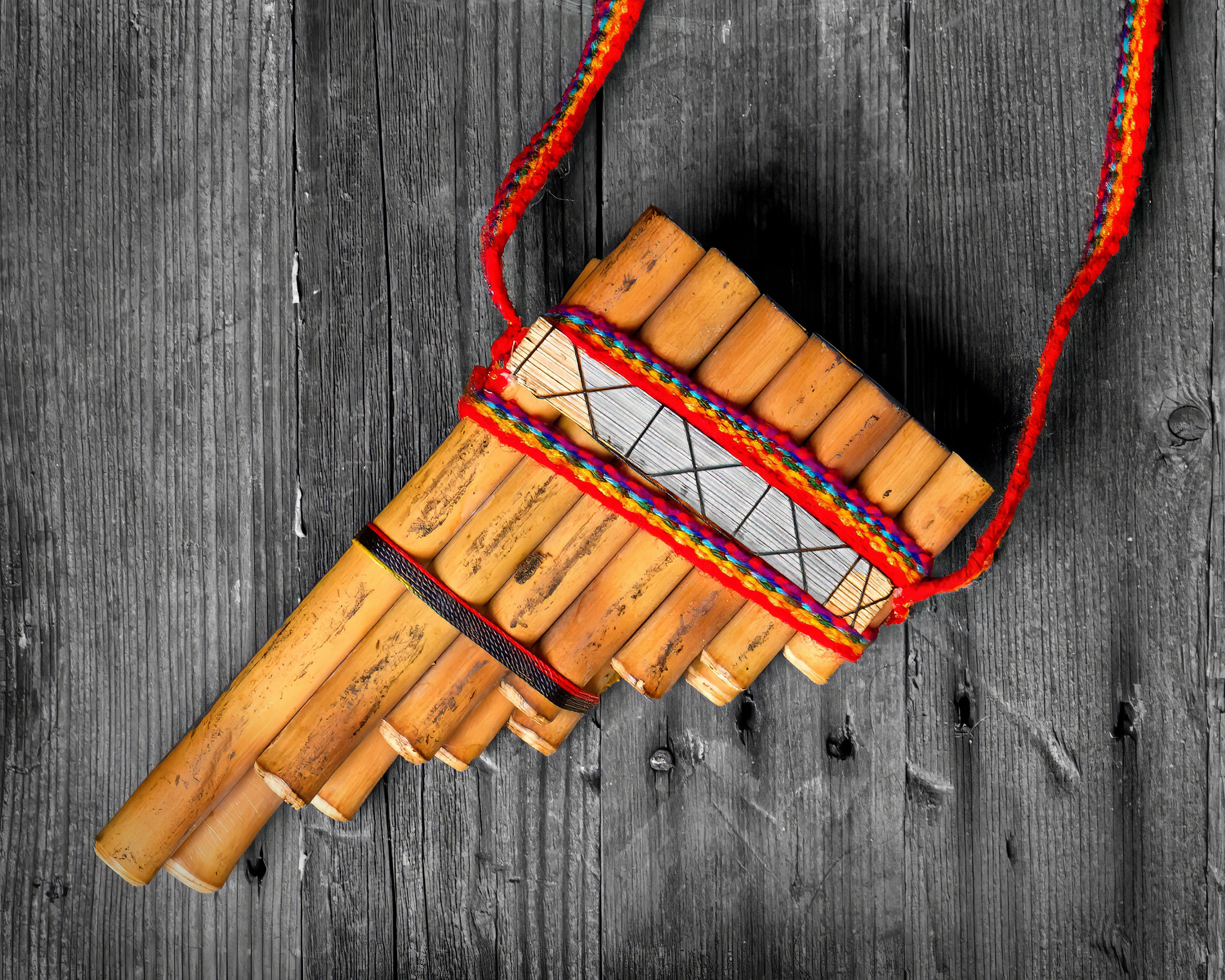
 Cross-Cultural Exchange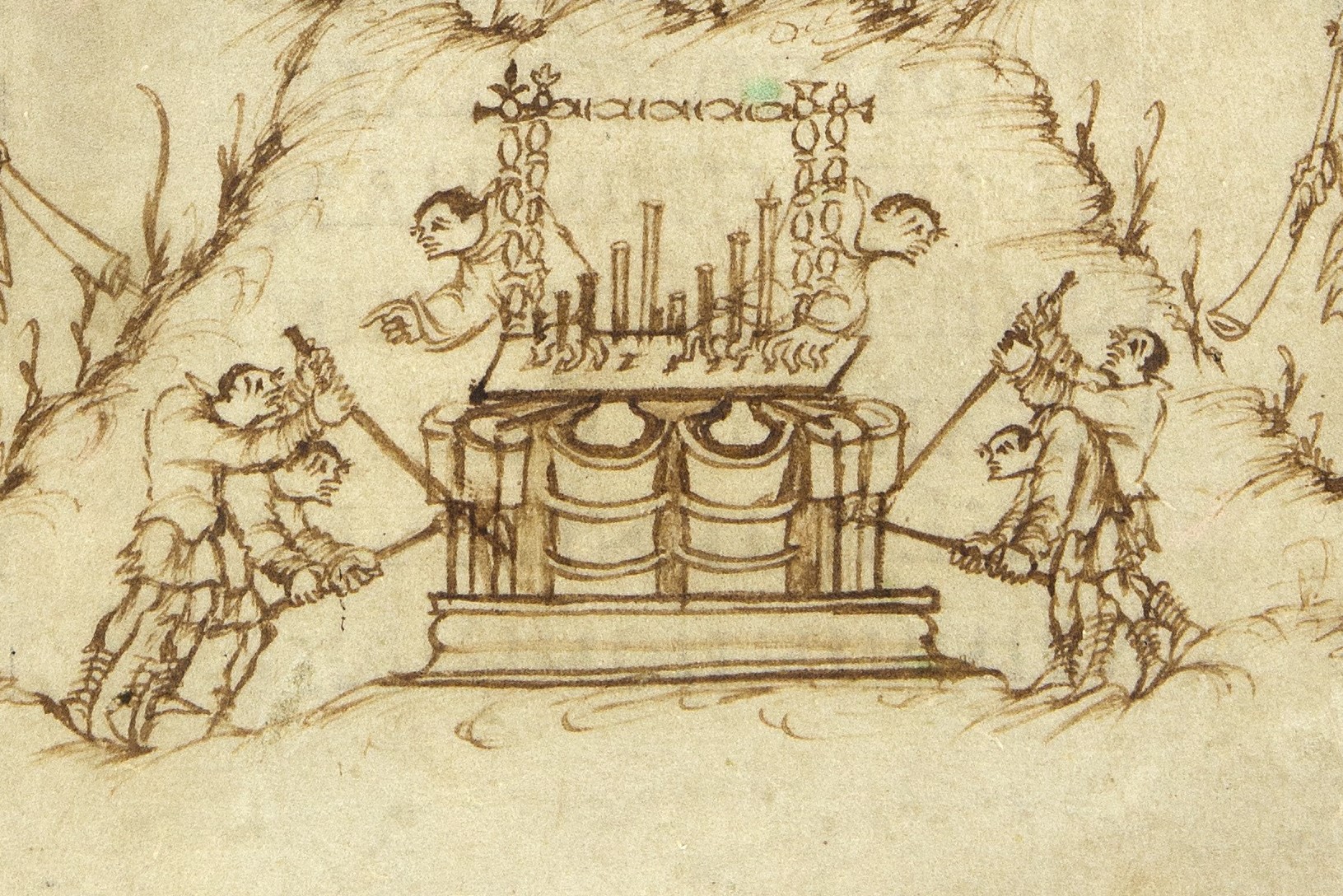
 Air Powered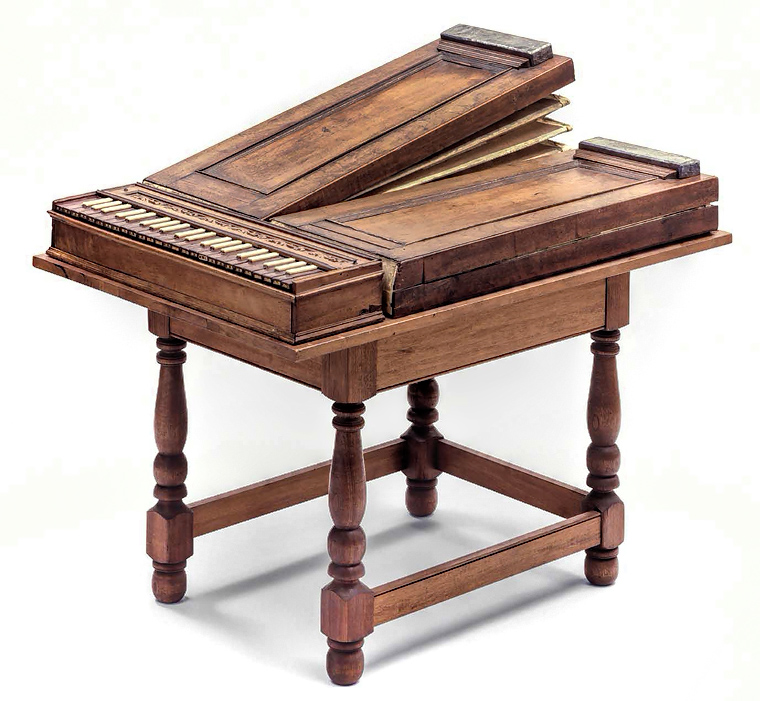
 Control Surfaces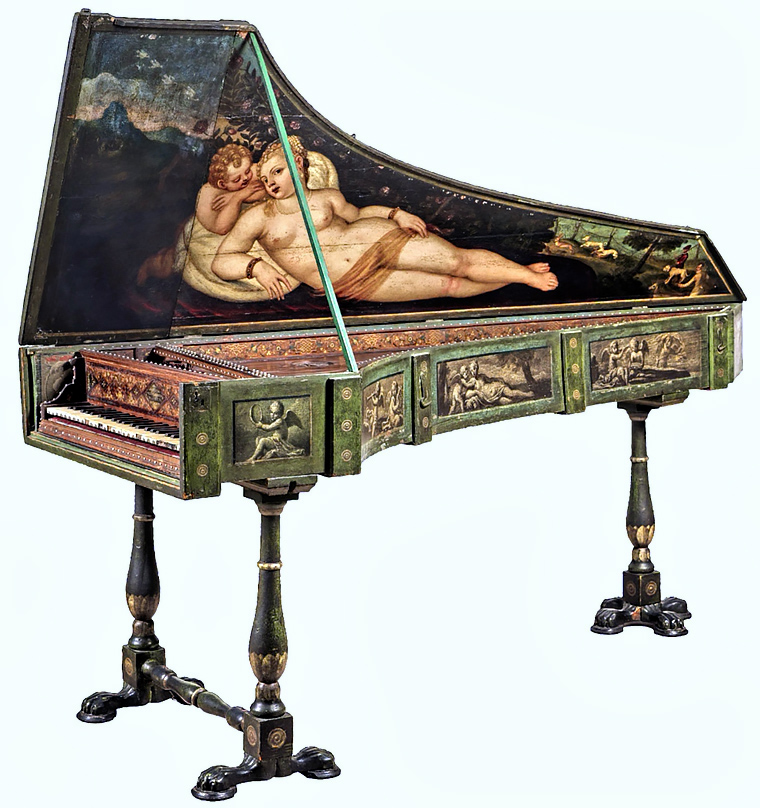
 Harpsichord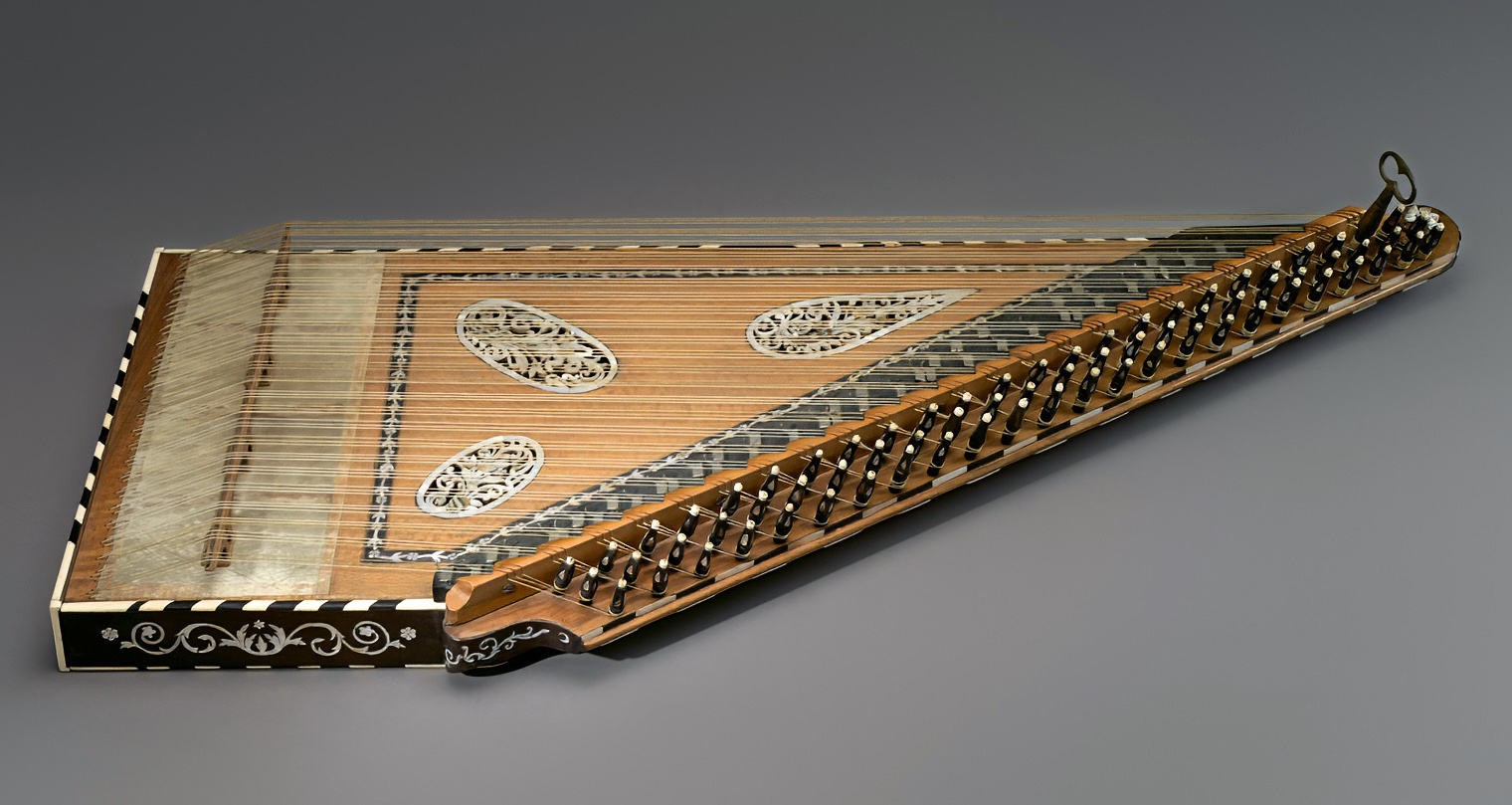
 Piano
Piano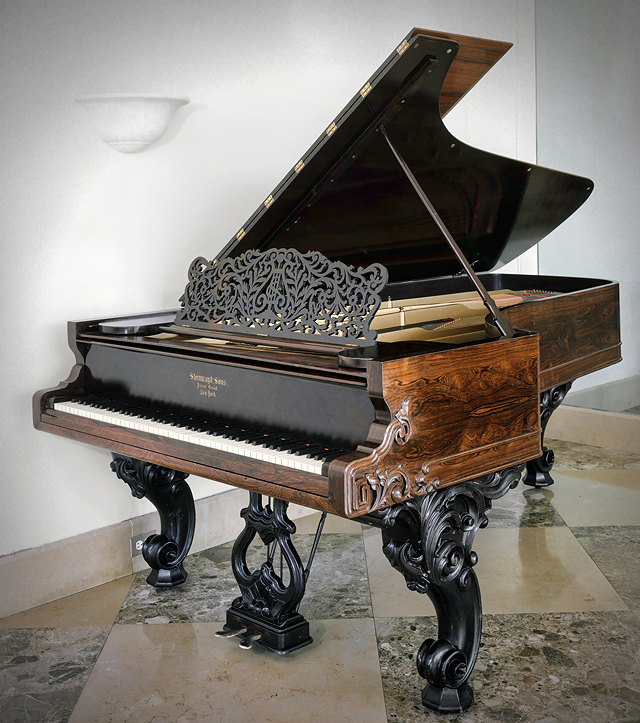
 Electrophones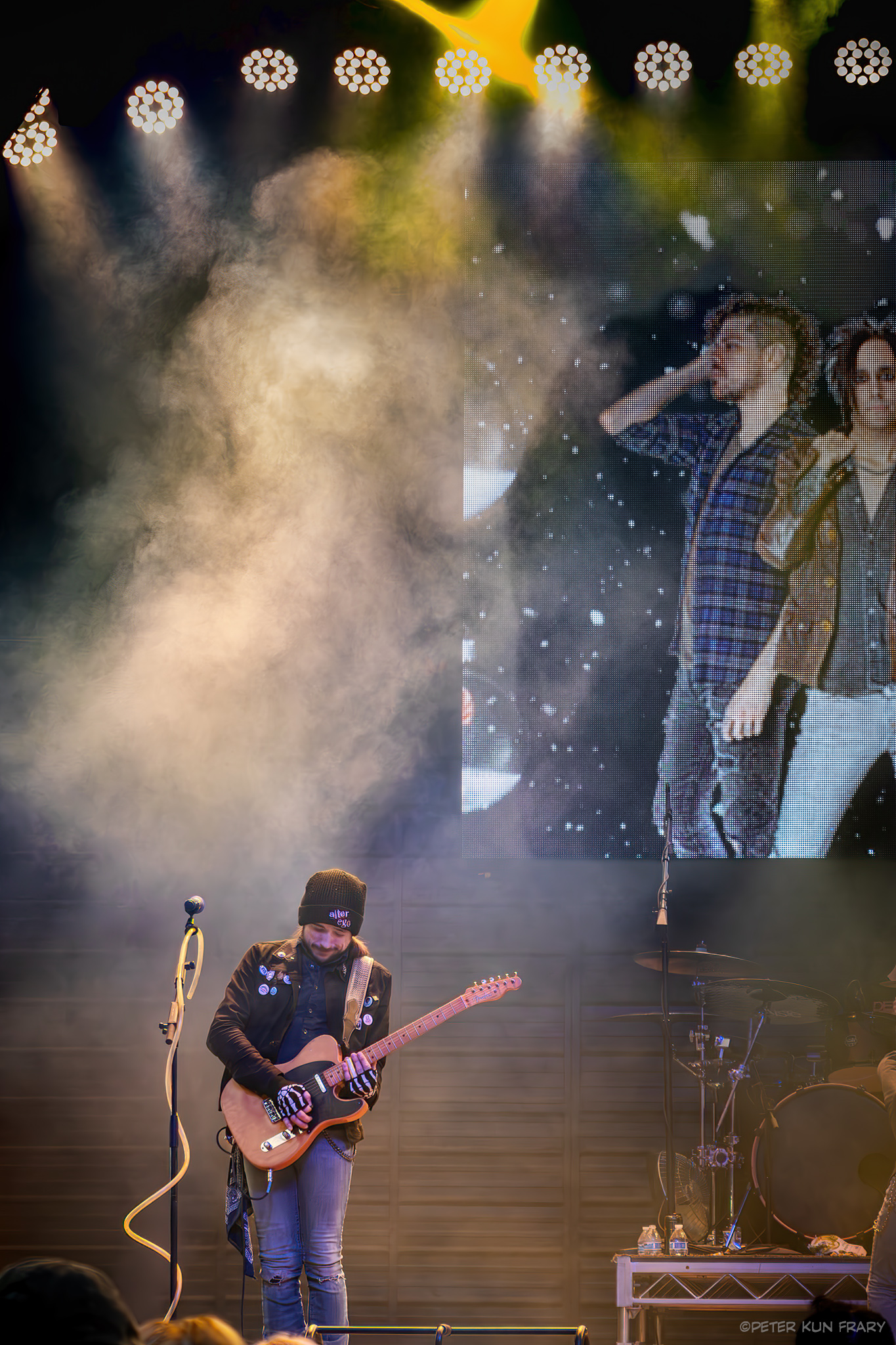
 Modified Acoustic Instruments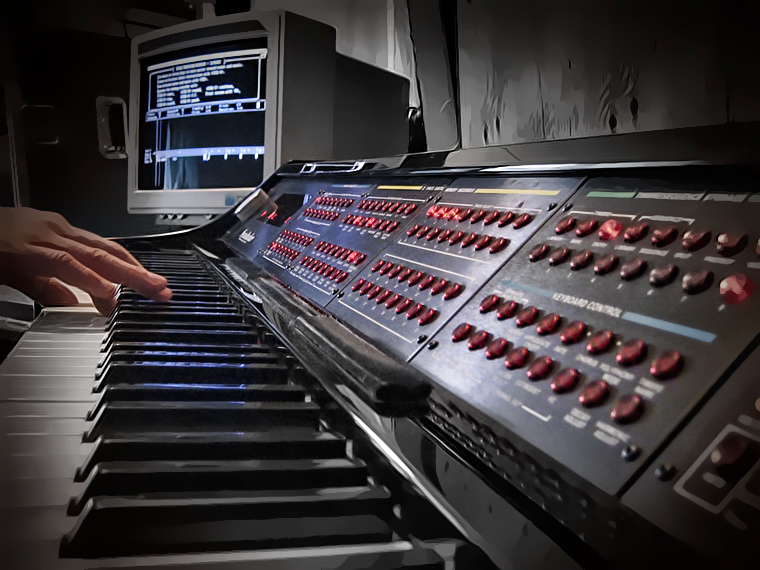
 Purely Electronic